Quick Verdict
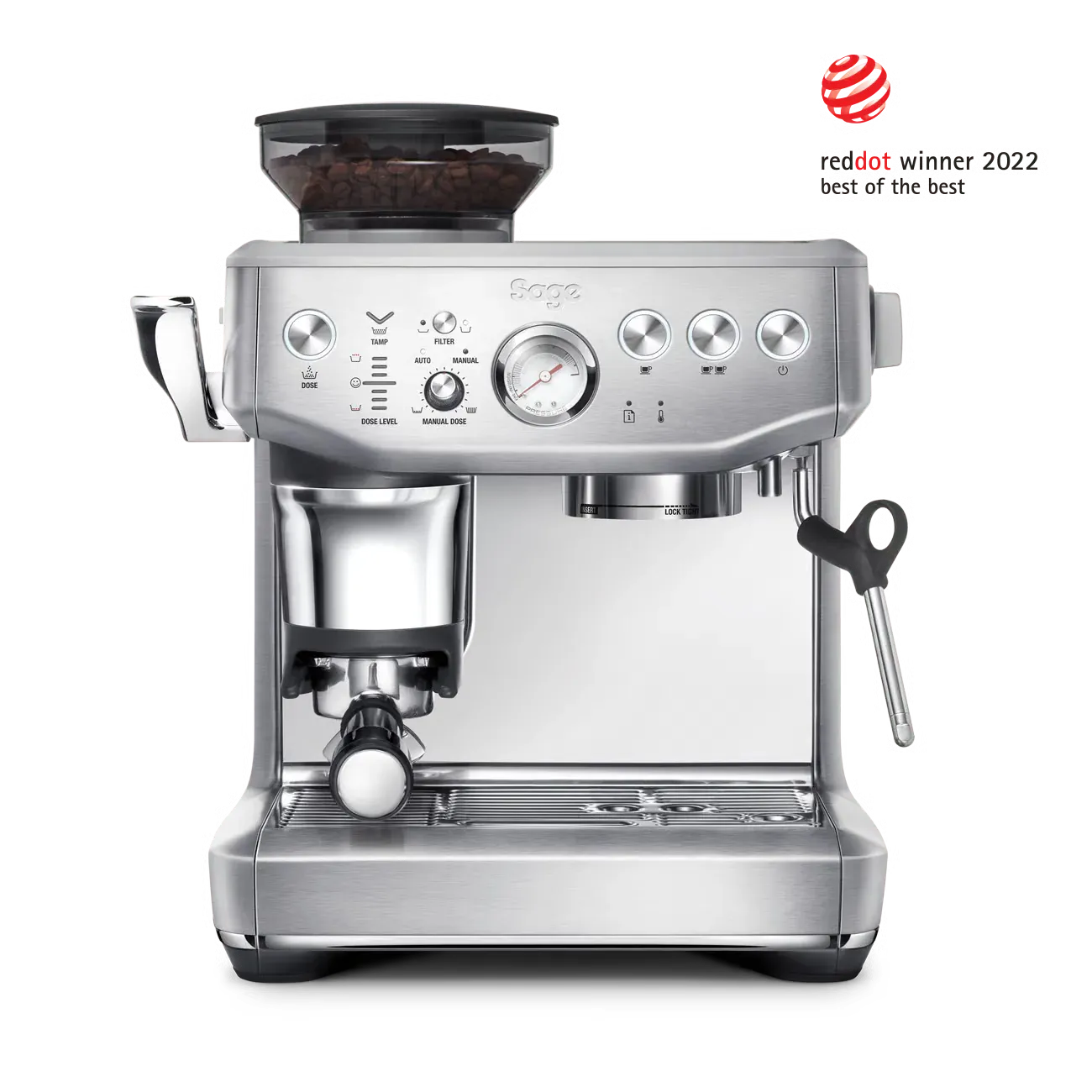
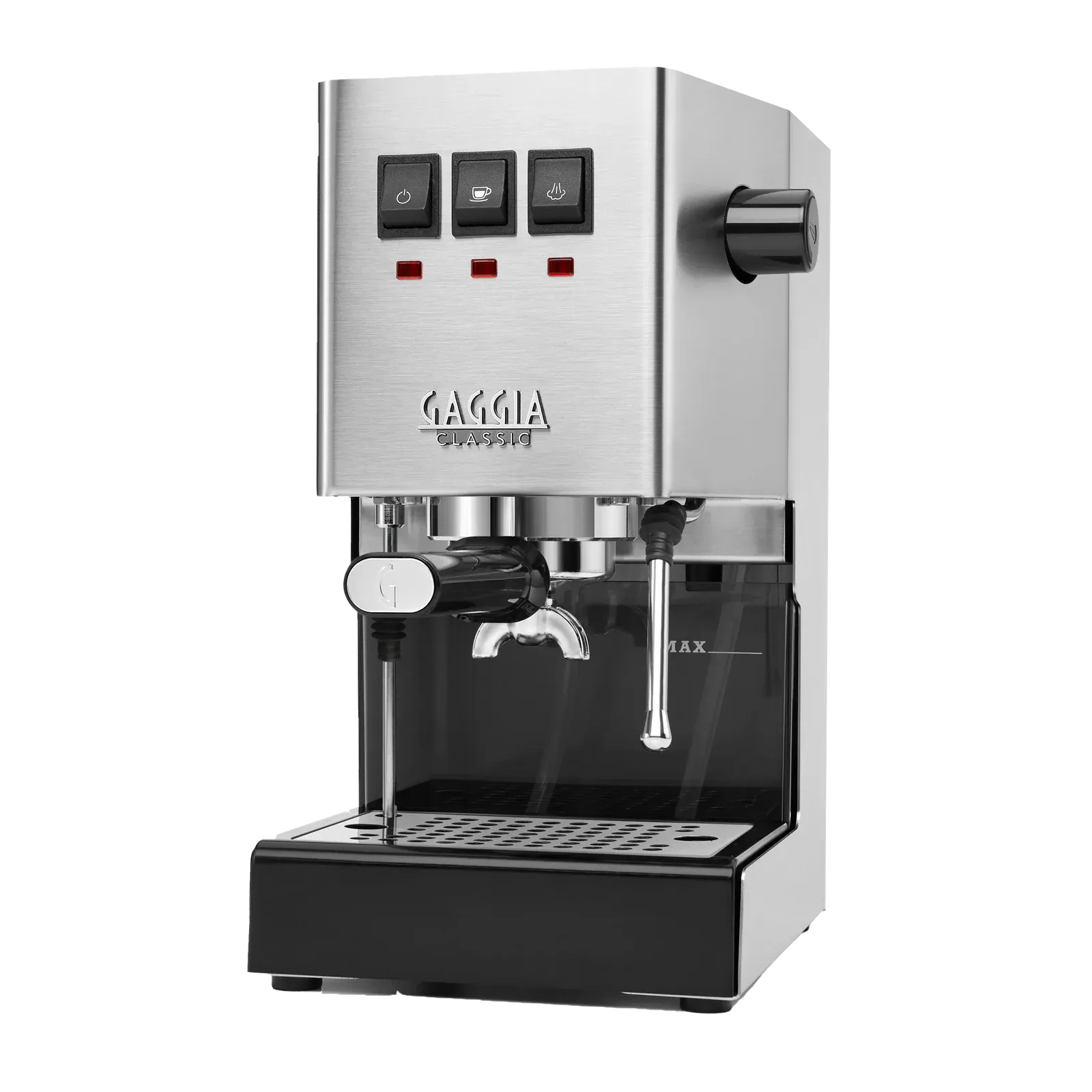
The Barista Express Impress is the stronger choice for most first-time UK buyers. It handles everything in a single footprint with a guided workflow that produces consistent results from day one. The Gaggia Classic Evo Pro is a bare-bones platform that rewards patience and skill, with a long-term ceiling the Sage cannot match. For most UK buyers entering home espresso, the Barista Express Impress is the safer bet. For the enthusiast who enjoys tinkering and wants a 58mm ecosystem, the Gaggia Classic Evo Pro has headroom the Sage lacks.
Who Should Buy the Sage Barista Express Impress
-
You want espresso and milk drinks without buying a separate grinder
-
You have limited counter space and want one footprint
-
You want guided workflow features to reduce variables
-
You drink mostly milk-based drinks like flat whites and lattes
-
You want decent results within the first week of ownership
Who Should Buy the Gaggia Classic Evo Pro
-
You already own a grinder, or plan to buy a dedicated one
-
You want a machine you can modify and upgrade over several years
-
You care about long-term repairability and lower parts costs
-
You want to develop real espresso technique, not just follow prompts
-
You’re comfortable with a steeper learning curve in exchange for higher potential
Grinder: Built-In Convenience vs. Separate Investment
The Barista Express Impress includes a conical burr grinder with 25 grind settings and an auto-dose function that adjusts based on previous shots. For most home users, this grinder is more than adequate. It’s not a replacement for a dedicated grinder at the same price, but it’s a step above supermarket pre-ground. The integrated workflow removes one of the biggest variables for new espresso makers.
The Gaggia Classic Evo Pro ships with no grinder. To extract well from its 58mm unpressurised basket, you need a grinder capable of repeatable fine adjustment. Compare the full Gaggia setup cost with the Sage rather than comparing the machine prices alone.
The trade-off is clear: the Sage bundles convenience, the Gaggia forces a better grinder choice. Long-term, a dedicated grinder paired with the Gaggia will produce more consistent grind quality than the Sage’s integrated burrs.
Espresso Quality: Temperature Stability and Pressure
The Barista Express Impress uses a thermocoil with PID temperature control, targeting extraction at a stable temperature throughout the shot. PID control matters because even small temperature swings can shift extraction noticeably. The machine also includes pre-infusion, which gradually increases pressure before the full 9 bar pump engages, helping to reduce channelling.
The 2023 Gaggia Classic Evo Pro ships without a PID and uses a coated aluminium boiler, not the brass boiler fitted to the later E24. Temperature surfing is a common workaround reported by owners on the Home-Barista forum, but the exact routine depends on the machine and starting temperature.
PID retrofit kits are widely fitted by owners and can improve temperature repeatability. They are modifications, can affect warranty support and do not eliminate the need for a capable grinder or consistent puck preparation.
For out-of-box espresso consistency, the Sage has a measurable advantage. For modified long-term performance, the Gaggia with a PID is comparable or superior.
Steam Performance and Milk Drinks
Both machines use a single boiler design, which means you must wait between pulling a shot and steaming milk. On the Barista Express Impress, the transition typically takes around 30 seconds. On the Gaggia Classic Evo Pro, the transition is similar but the machine requires purging the wand before steaming to clear condensation.
The Gaggia’s commercial-style two-hole steam wand gives experienced users more control over microfoam texture. The Sage’s wand is functional but less precise, better suited to beginners.
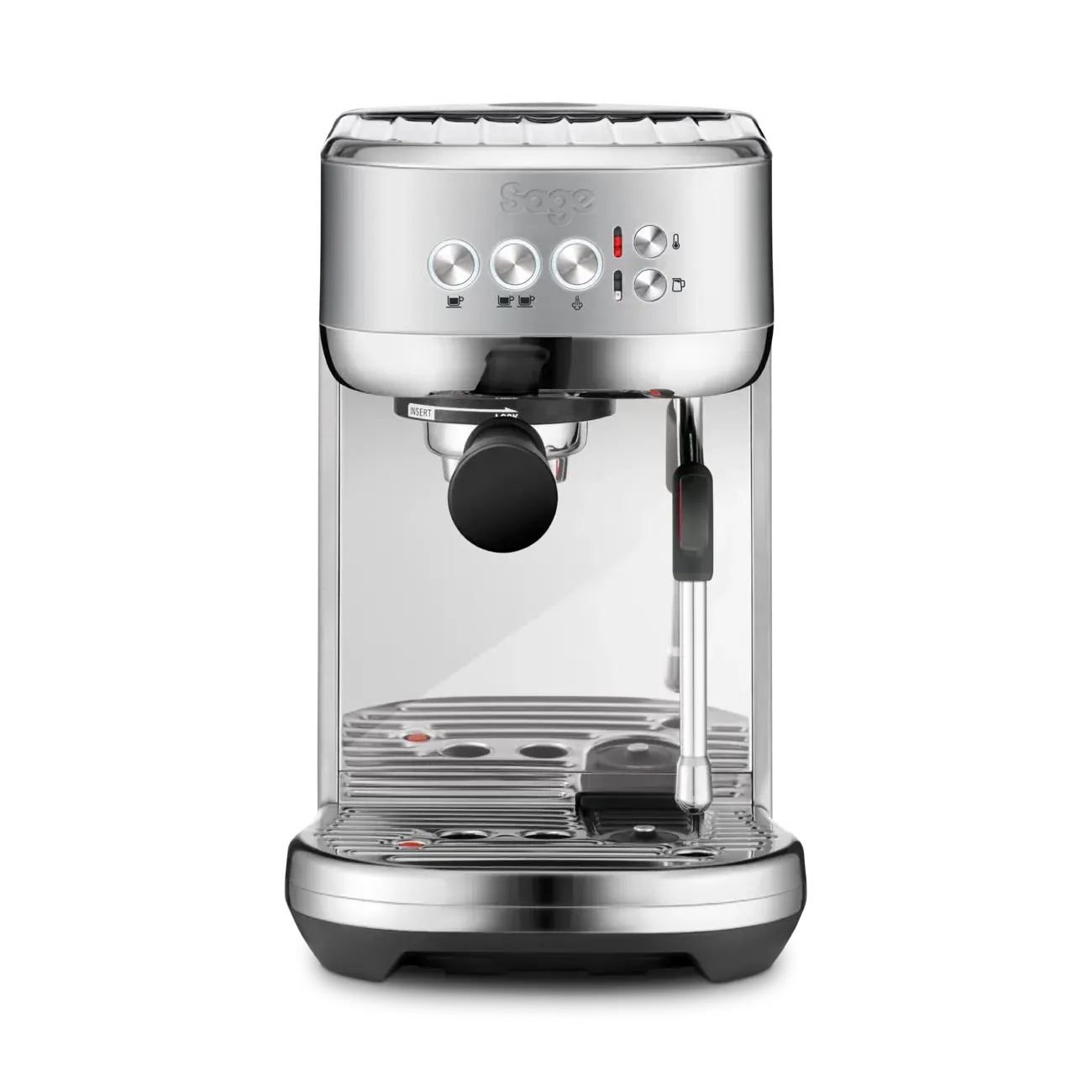
Neither machine is fast at steaming. If you regularly make rounds of multiple milk drinks, both will test your patience compared to a dual-boiler setup. For dedicated milk drink speed, the Bambino Plus is worth considering instead. It reaches brew temperature in under 3 seconds using a ThermoJet system, a meaningful difference for busy mornings.
Build Quality and Longevity
The Gaggia Classic Evo Pro has a strong reputation for longevity. Its simple, serviceable design means parts are widely available, and the community at Home-Barista has documented repair guides for almost every component. Owners report machines running well beyond 10 years with basic maintenance.
The Barista Express Impress is built to a high standard for its category, with a stainless steel body and solid feel at 10.98kg. However, the integrated grinder adds mechanical complexity, and Sage’s repair ecosystem is less community-supported than Gaggia’s. Sage UK offers a two-year warranty, and replacement parts are available, but DIY repairability is more limited.
For pure longevity and repairability, the Gaggia Classic Evo Pro has the edge. See the full Classic Evo Pro review for more detail on serviceability.
What’s Actually Bad About Each Machine
Sage Barista Express Impress: Real Downsides
54mm portafilter is non-standard. The 54mm basket limits third-party accessory compatibility. Most precision baskets, distributor tools, and tampers sold in the UK are designed for 58mm. This won’t matter in years one or two, but becomes a constraint if you want to explore the wider accessory market. If the 58mm ecosystem matters to you from day one, the Gaggia Classic Evo Pro solves this directly.
Integrated grinder creates a single point of failure. If the grinder develops a fault, the whole unit needs attention. Owners on Home-Barista note this as a long-term concern, particularly for machines used daily beyond the warranty period.
Less upgradeable over time. The Barista Express Impress is largely what it is out of the box. There’s no PID retrofit path, no group head modification community, and limited headroom for performance improvement. If you anticipate wanting to push further in year three or four, this ceiling matters.
Gaggia Classic Evo Pro: Real Downsides
No PID out of the box. Temperature stability requires either technique (temperature surfing) or a PID retrofit. This is a known and solvable issue, but it’s an extra cost and step that Sage avoids entirely. If you want stable temperature from day one without modification, the Barista Express Impress is the cleaner choice.
Requires a separate grinder investment. The total outlay for a Gaggia Classic Evo Pro setup is meaningfully higher than the headline machine price. Budget realistically for a grinder. See the best espresso grinder UK guide for suitable pairings and trade-offs.
Steeper learning curve. The Gaggia rewards patience and technique. New owners should expect weeks rather than days before pulling consistently good shots. This is a feature for some buyers and a barrier for others.
Sage Barista Express Impress vs Gaggia Classic Evo Pro: How They Compare
The Barista Express Impress delivers a more consistent, guided experience. Its PID, integrated grinder with 25 settings, and auto-dose function reduce the number of variables a new user must manage. The result is a machine that produces good espresso reliably from a 54mm portafilter, even if it cannot match the ceiling of a well-configured Gaggia setup.
The Gaggia Classic Evo Pro demands more from the user but offers more control over time. Its 58mm portafilter, serviceable layout and modification ecosystem make it the stronger enthusiast platform. A PID and quality grinder can raise repeatability, but the result still depends on technique and the exact Gaggia generation.
For a broader view of the market at this price point, the Best Espresso Machines Under £500 UK guide covers both machines alongside other strong contenders. If you’re also weighing a smaller Sage option, the Bambino Plus vs Gaggia Classic Evo Pro comparison covers that specific decision.
FAQ
Is the Sage Barista Express Impress good for beginners?
The Barista Express Impress suits beginners well. Its integrated conical burr grinder with 25 settings, auto-dose function, and PID temperature control reduce the variables that trip up new espresso makers. Most owners report pulling acceptable shots within the first few days of ownership.
Does the Gaggia Classic Evo Pro need a PID?
The Gaggia works without a PID, but repeatable shots require a consistent warm-up and temperature routine. The 2023 Evo uses a coated aluminium boiler, while the later E24 uses brass. A PID can make temperature management easier, but it is an aftermarket modification rather than a stock requirement.
Which machine has a better steam wand?
The Gaggia Classic Evo Pro has a more capable steam wand for experienced users. Its commercial-style two-hole wand allows finer microfoam control. Both are single-heater machines, so you wait for the temperature to climb between espresso and steam. The Sage wand is more forgiving for beginners.
Can you use the Gaggia Classic Evo Pro without a separate grinder?
Using pre-ground coffee is possible but limits control over shot time and flow. A dedicated espresso-capable burr grinder is strongly recommended for the 58mm unpressurised basket. Compare the price of the complete Gaggia setup with the Sage’s integrated workflow before deciding.
Which machine is easier to repair at home?
The Gaggia Classic Evo Pro is significantly easier to repair. Its simple design has been documented extensively by the Home-Barista community, with parts widely available in the UK. The Sage has a more complex integrated system around the built-in grinder and 1850W thermocoil assembly that limits DIY repair options.
How do these machines compare for counter space?
The Gaggia measures 230 x 240 x 380mm (W x D x H) and weighs 7.3kg on Gaggia’s spec sheet, but needs additional space for a separate grinder. The Barista Express Impress measures 330 x 380 x 410mm (W x D x H), weighs 10.98kg according to John Lewis, and includes everything in one footprint. For compact UK kitchens, the integrated Sage setup often takes less total area.
Which machine makes better espresso long-term?
The Gaggia Classic Evo Pro has a higher long-term ceiling. Paired with a quality grinder and a PID retrofit, it produces espresso that matches machines costing considerably more. The Sage plateaus earlier due to its 54mm portafilter and integrated grinder limitations, though it remains capable for daily use.
Final Verdict: Sage Barista Express Impress vs Gaggia Classic Evo Pro
The Sage Barista Express Impress vs Gaggia Classic Evo Pro decision comes down to one clear fork: do you want a machine that works well immediately, or a platform you can grow into over years?
The Barista Express Impress is recommended for UK buyers who want reliable espresso from day one, don’t want to budget separately for a grinder, and value a guided, consistent workflow. Buy this if you’re entering home espresso for the first time and want the simplest path to good coffee.
The Gaggia Classic Evo Pro is recommended for buyers prepared to invest in a separate grinder, learn technique and confirm which boiler generation they are buying. Pair it with a quality grinder first; consider a PID only after a consistent stock workflow shows that temperature control is the limiting factor.
For more comparisons, check out the Bambino Plus vs Gaggia Classic Evo Pro comparison.