Our pick: Sage Bambino Plus
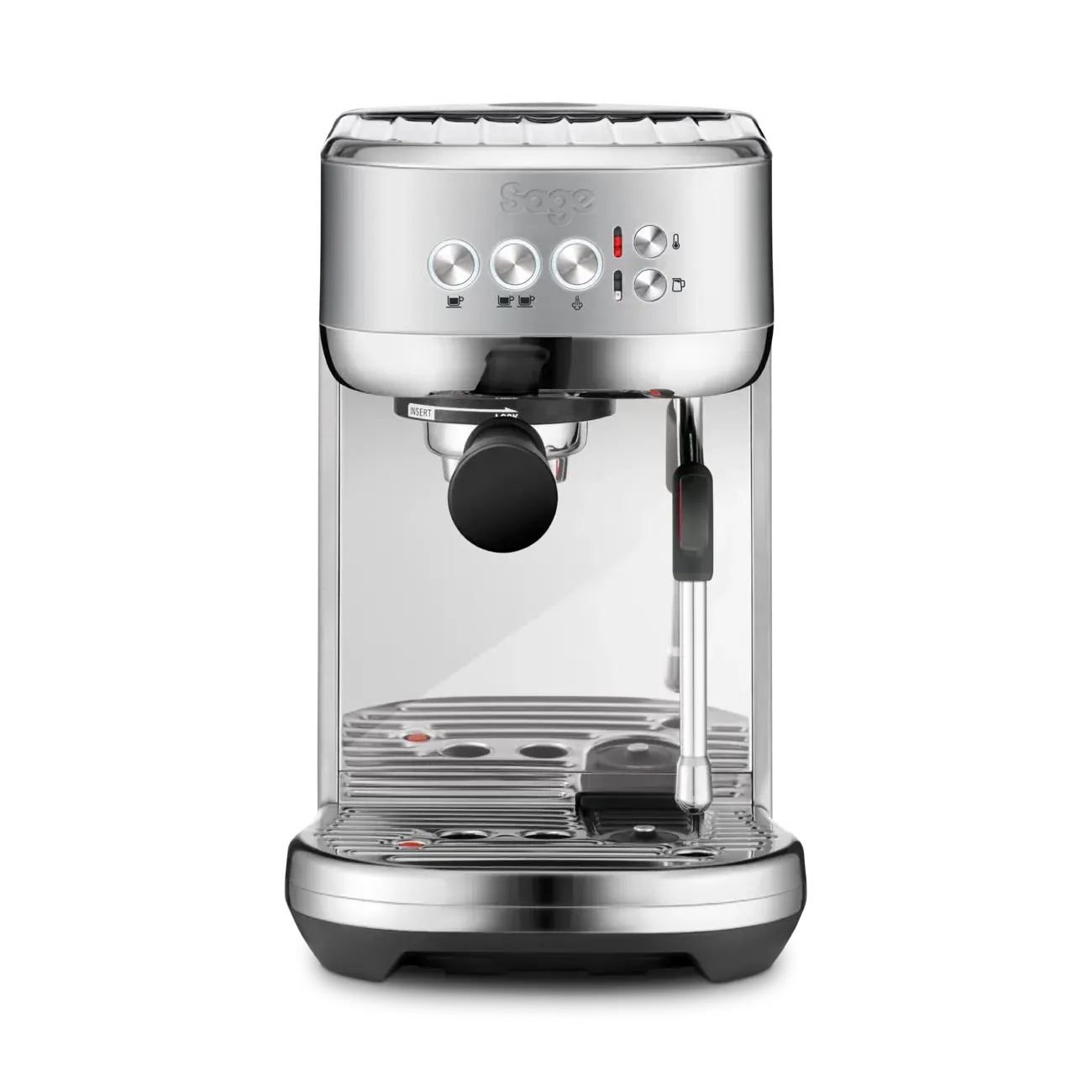
The Sage Bambino Plus is the best compact espresso machine for UK flat-white drinkers who want automatic milk texturing and will pair it with a separate grinder.
Check price at Amazon UK
Affiliate link
The Sage Bambino Plus is the best compact espresso machine for UK flat-white drinkers who want automatic milk texturing and will pair it with a separate grinder.
Affiliate link
The best espresso machine under £500 in the UK is the Sage Bambino Plus if the limit covers the machine alone. It suits flat-white drinkers who want a 3-second start, repeatable automatic milk and less technique to learn. If £500 must cover the machine and grinder, buy the Sage Bambino and put the saving into the grinder. Choose the De'Longhi Dedica EC685 only when low cost or a 14.9 cm-wide body matters more than stock espresso and milk performance.
Ranked number 1
The Sage Bambino Plus is the best compact espresso machine for UK flat-white drinkers who want automatic milk texturing and will pair it with a separate grinder.
Ranked number 2
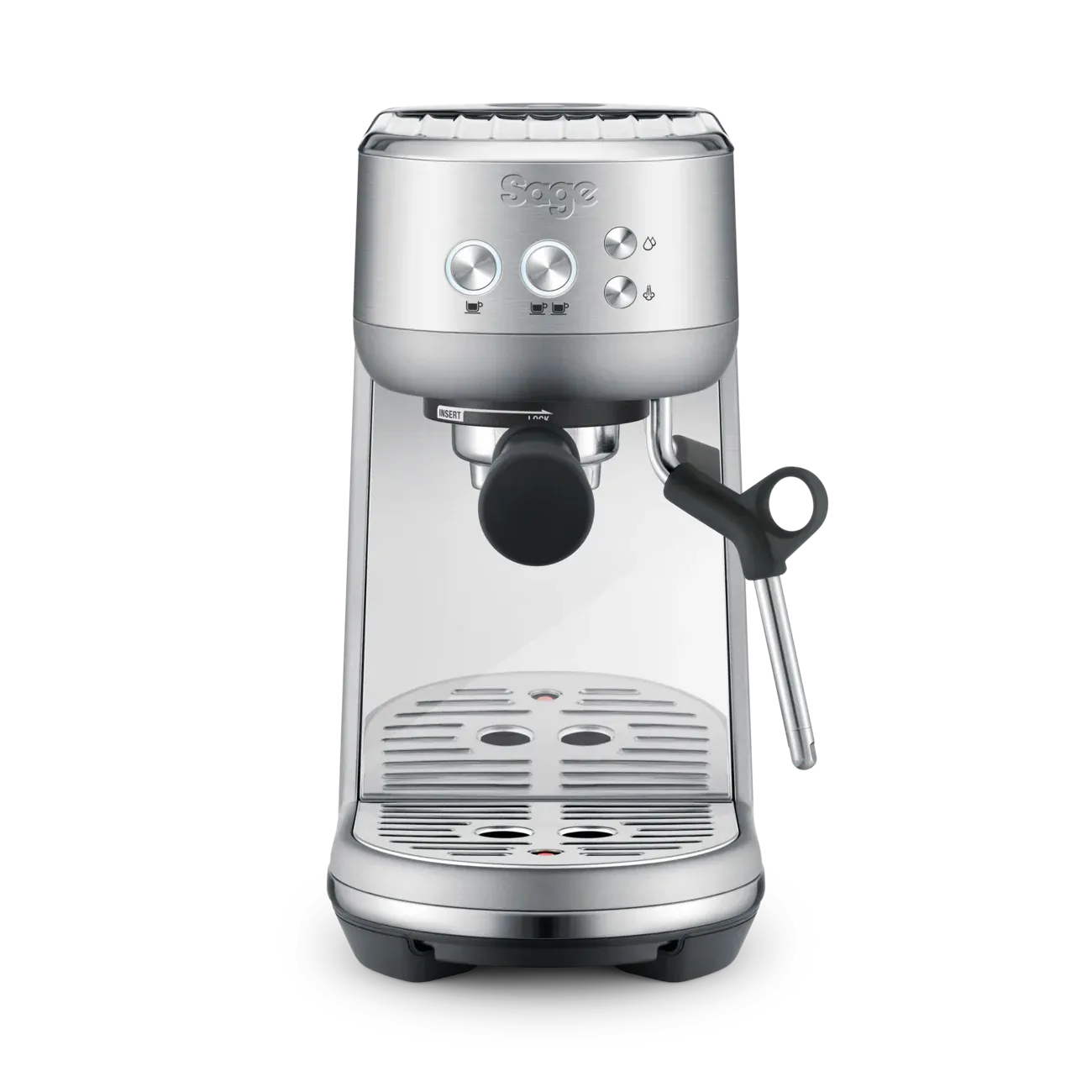
Buy this if you want the lower-cost Sage for espresso and Americanos without automatic milk. It keeps the Bambino Plus's ThermoJet speed, 54mm format and 9-bar extraction.
Ranked number 3
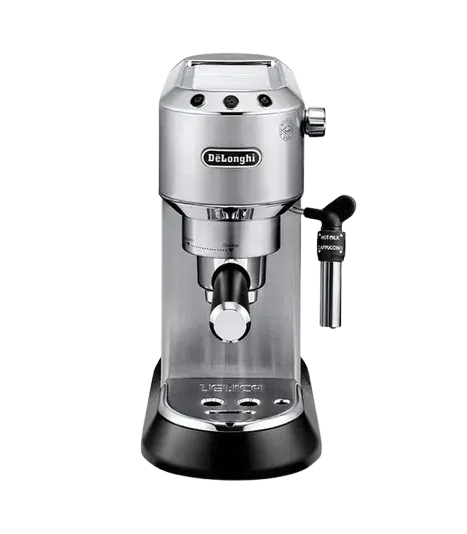
Buy this if you want a low-cost espresso machine for a very narrow counter. At 15cm wide with a 30-second heat-up, the Dedica fits where larger machines will not.
TL;DR
Best overall: Sage Bambino Plus
Best value: Sage Bambino
Best for the smallest kitchen or lowest spend: De’Longhi Dedica Style EC685
Best enthusiast deal: Gaggia Classic E24, but only when a documented brass-boiler unit is actually below £500
Best use of a complete £500 budget: spend less on the machine and protect enough money for an espresso-capable grinder
Buy the Sage Bambino Plus for fast, consistent milk drinks. Its 54 mm stainless steel portafilter takes an 18 g dose, low-pressure pre-infusion leads into a 9 bar extraction, and the automatic wand offers 3 milk temperatures and 3 texture settings. It is the safest recommendation for a household moving from pods or café coffee.
Buy the Sage Bambino if you mainly drink espresso or Americanos, or if you want to learn manual milk steaming. It keeps the 3-second ThermoJet, 54 mm format and 9 bar extraction, while removing the Plus model’s automatic milk system and three-way solenoid valve. The lower machine cost leaves more of a fixed setup budget for the grinder.
Buy the De’Longhi Dedica Style EC685 if the Sage machines do not fit the space or budget. It is 14.9 cm wide, weighs 4.22 kg and uses a 1.1 L water tank. Its pressurised baskets are forgiving with pre-ground coffee, but the 51 mm format and Panarello-style milk system give it a lower ceiling in stock form.
A verified brass-boiler Classic E24 can appear below £500 during promotions, but standard UK listings often sit above the cap. The 2023 coated-aluminium Classic Evo Pro is a different machine, so confirm the boiler generation before comparing prices.
| Buying question | Sage Bambino Plus | Sage Bambino | De’Longhi Dedica EC685 | Gaggia Classic E24 |
|---|---|---|---|---|
| Place in this guide | Best overall | Best value | Small-space pick | Conditional deal pick |
| Heating system | ThermoJet | ThermoJet | Thermoblock | 120 cc brass boiler |
| Ready indication | 3 seconds | 3 seconds | About 30 seconds | Several minutes |
| Sensible warm-up step | Blank shot | Blank shot | Blank shot | Heat group and portafilter |
| Portafilter | 54 mm stainless steel | 54 mm aluminium | 51 mm | 58 mm stainless steel |
| Brew pressure claim | 9 bar extraction | 9 bar extraction | 15 bar pump rating | 15 bar pump, 11 to 15 bar OPV |
| Milk system | Automatic or manual | Manual | Adjustable Cappuccino System | Manual professional wand |
| Water tank | 1.9 L | 1.4 L | 1.1 L | 2.1 L |
| Three-way solenoid | Yes | No | No | Yes |
| Grinder included | No | No | No | No |
| Best for | Fast flat whites | Espresso value | Tight counters | Manual hobby and repairability |
Pump rating and pressure at the coffee are not the same measurement. Sage explicitly documents a 9 bar extraction from a 15 bar pump on both Bambino models. De’Longhi publishes a 15 bar pump specification for the Dedica but does not claim that 15 bar reaches the coffee throughout a shot. Gaggia UK lists both the E24’s 15 bar pump and an 11 to 15 bar OPV range, so a UK buyer should not assume the US machine’s pressure setup.
The Sage Bambino Plus is the right choice for most people searching for the best espresso machine under £500 UK. It removes two common sources of morning frustration: waiting for a boiler and learning milk texture by touch. You still grind, dose, tamp and judge the shot, but the machine handles temperature and milk with fewer moving variables.
Sage’s current UK product page confirms the 3-second ThermoJet start, 54 mm stainless steel portafilter, 18 g dose, low-pressure pre-infusion and 9 bar extraction. The automatic wand provides 3 temperature levels and 3 texture levels, then stops against the temperature sensor beneath the jug. Manual steaming remains available when you want direct control.
The 3-second claim needs context. The water path is ready quickly, but the portafilter, basket and cup begin cold. Lock in the empty portafilter and run one blank shot before dosing. That small step improves the thermal starting point without turning the routine into a traditional long warm-up.
You make flat whites, lattes or cappuccinos most days
You want repeatable milk without learning wand position immediately
You are upgrading from a pod machine
You need a compact machine that is 19.4 cm wide
You normally use medium or darker espresso roasts
You accept buying a separate grinder
The fixed electronic brew temperature favours approachable medium and darker roasts. A light-roast specialist may eventually want selectable temperature, greater thermal mass and pressure feedback. That is a reason to save for another tier, not a reason to buy a less convenient machine within this one.
The standard Sage Bambino is the better allocation of money when £500 covers the whole setup. It uses the same basic ThermoJet approach, 54 mm dose format, low-pressure pre-infusion and 9 bar extraction as the Plus. Its manual steam wand asks more from the user, but espresso drinkers do not pay for an automatic milk system they rarely use.
Sage’s Bambino product page confirms a 3-second ThermoJet, an 18 g dose in a 54 mm portafilter and both single-wall and dual-wall baskets. Single-wall baskets suit freshly ground coffee and proper grind adjustment. Dual-wall baskets create resistance themselves, which makes them more tolerant of supermarket grounds while you save for a grinder.
The missing three-way solenoid changes the clean-up. Pressure does not vent into the drip tray as soon as the shot ends, so the puck stays wetter and removing the portafilter immediately can spray water and grounds. Wait several seconds before unlocking it. This is inconvenient rather than a flavour defect.
You mainly drink espresso, long blacks or Americanos
You want to learn manual milk steaming
Your total budget must include a grinder and scale
You prefer fresh-ground espresso over automatic milk features
You want the same fast start and 9 bar extraction as the Plus
Choose the Plus if the household makes milk drinks every day. Choose the standard Bambino if the saving funds a meaningfully better grinder. Grind consistency changes every shot, while automatic milk only changes the milk workflow.
The De’Longhi Dedica Style EC685 earns its place through size and accessibility, not because it beats the Bambino models on stock espresso. De’Longhi’s UK specification gives dimensions of 14.9 × 33 × 30.5 cm, a 4.22 kg weight, 1.1 L tank, 1450 W input and 15 bar pump rating. It fits counter gaps that rule out most conventional machines.
The included pressurised baskets work with pre-ground coffee and ESE pods. They create crema and hide some grind inconsistency, which makes the first week easier. The trade-off is less control over extraction than a good single-wall basket paired with a capable grinder.
The adjustable Cappuccino System can heat milk and create thicker foam. It is better suited to a traditional cappuccino than fine, glossy flat-white microfoam. Owners who later remove sleeves, replace baskets or fit different portafilters are changing the stock machine and taking on compatibility or warranty risk.
Your available width is close to 15 cm
You need the lowest entry cost of these three picks
You want to start with pre-ground coffee or ESE pods
You mostly make espresso or foam-forward cappuccinos
You accept that upgrades may not transfer to a later 54 mm or 58 mm machine
Buy the Bambino if both fit your counter and budget. Its documented 9 bar extraction, 54 mm basket and stronger path to fresh-ground espresso make it the better stock machine. The Dedica is the practical answer when the Sage is not practical.
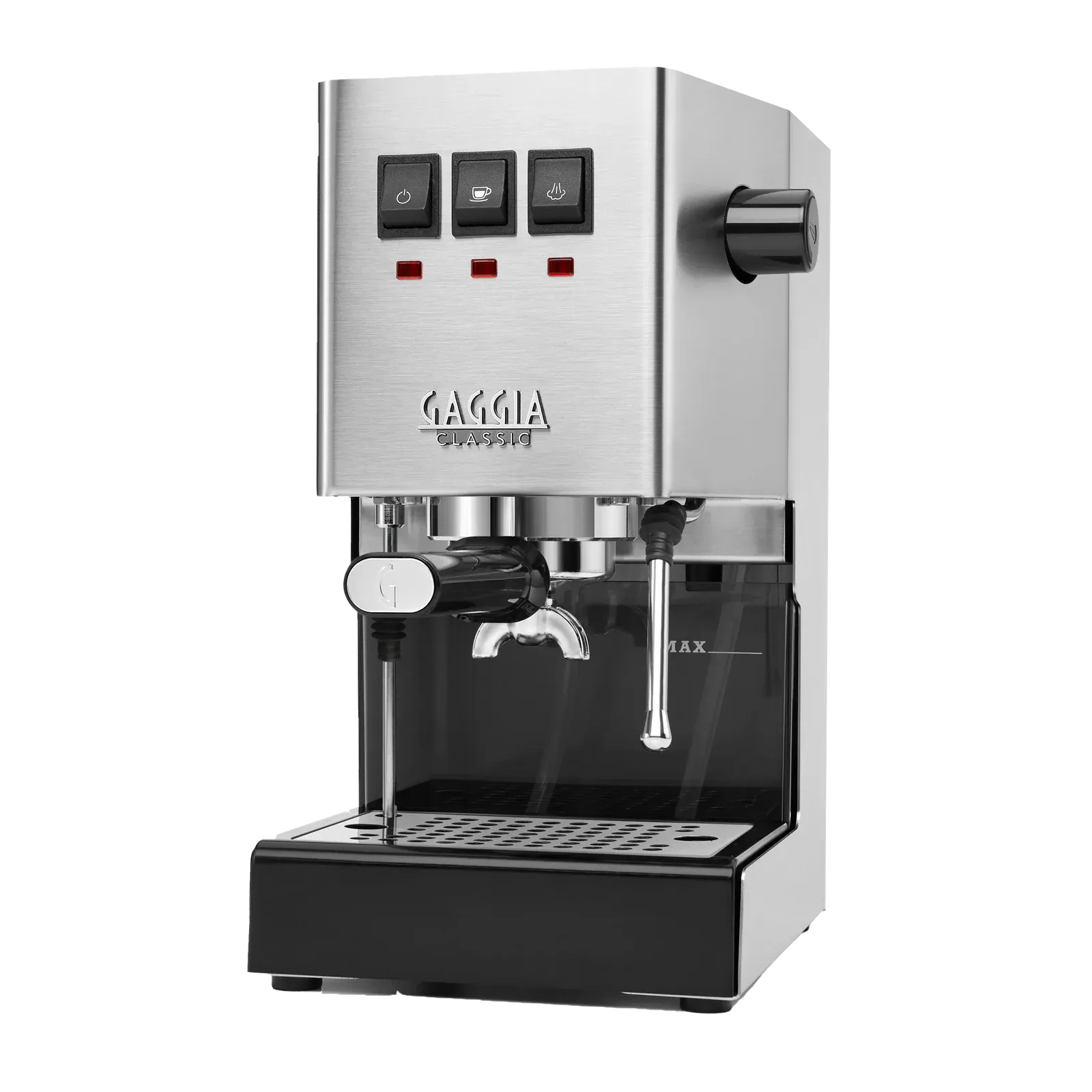
The Gaggia Classic E24 is the enthusiast choice only when two conditions are true: the actual selling price is below £500, and the seller confirms the 120 cc brass boiler. Some current UK colour listings meet the first condition. Many standard listings do not, so this guide does not rank it alongside machines that consistently fit the ceiling.
Gaggia UK’s Classic boiler history separates three similar-looking generations. The 2023 Classic Evo used a non-stick coated aluminium boiler. Polished aluminium returned in April 2024. The E24 then introduced a 120 cc lead-free brass boiler. A product title containing “Classic” or “Evo” does not identify those internals.
The E24 has a 58 mm stainless steel portafilter, three-way solenoid, professional manual wand and replaceable conventional parts. It also lacks a stock PID and pressure gauge. Its 15 bar pump and UK-listed 11 to 15 bar OPV should be verified rather than described as a factory 9 bar system.
Buy it if repairability, 58 mm accessories and manual technique are the point of the purchase. Skip it if you want a fast flat white before work. Our Sage Bambino Plus vs Gaggia Classic Evo Pro comparison explains the model checks, coated-boiler history and workflow difference in detail.
The Sage Barista Express Impress is a capable all-in-one, but Sage’s current UK listing sits above this guide’s ceiling. It therefore does not qualify for the shortlist.
Its integrated grinder has 25 settings, the assisted system applies a 10 kg tamp, and the 54 mm portafilter extracts at 9 bar. If that one-box workflow is worth increasing the budget, read the Barista Express Impress review instead.
The word “machine” matters. A £500 machine-only budget and a £500 complete-setup budget lead to different recommendations.
If you already own an espresso-capable grinder, the Bambino Plus is the best use of the machine allowance. If you own no grinder, protect roughly 35 to 45 percent of the total setup budget for grinding, a small scale and basic cleaning supplies. Do not buy the most expensive machine you can afford and feed it inconsistent grounds.
A grinder controls particle size and therefore the resistance the coffee puck gives the water. Small adjustments can turn a fast, sour shot into a balanced one. The machine cannot correct a grind that is much too coarse, too fine or inconsistent.
For a complete setup, consider:
Sage Bambino plus espresso-capable grinder: the strongest route for espresso value and manual milk
Sage Bambino Plus plus an existing grinder: the easiest route for flat whites
Dedica plus pressurised basket: the lowest initial spend, with a clear performance ceiling
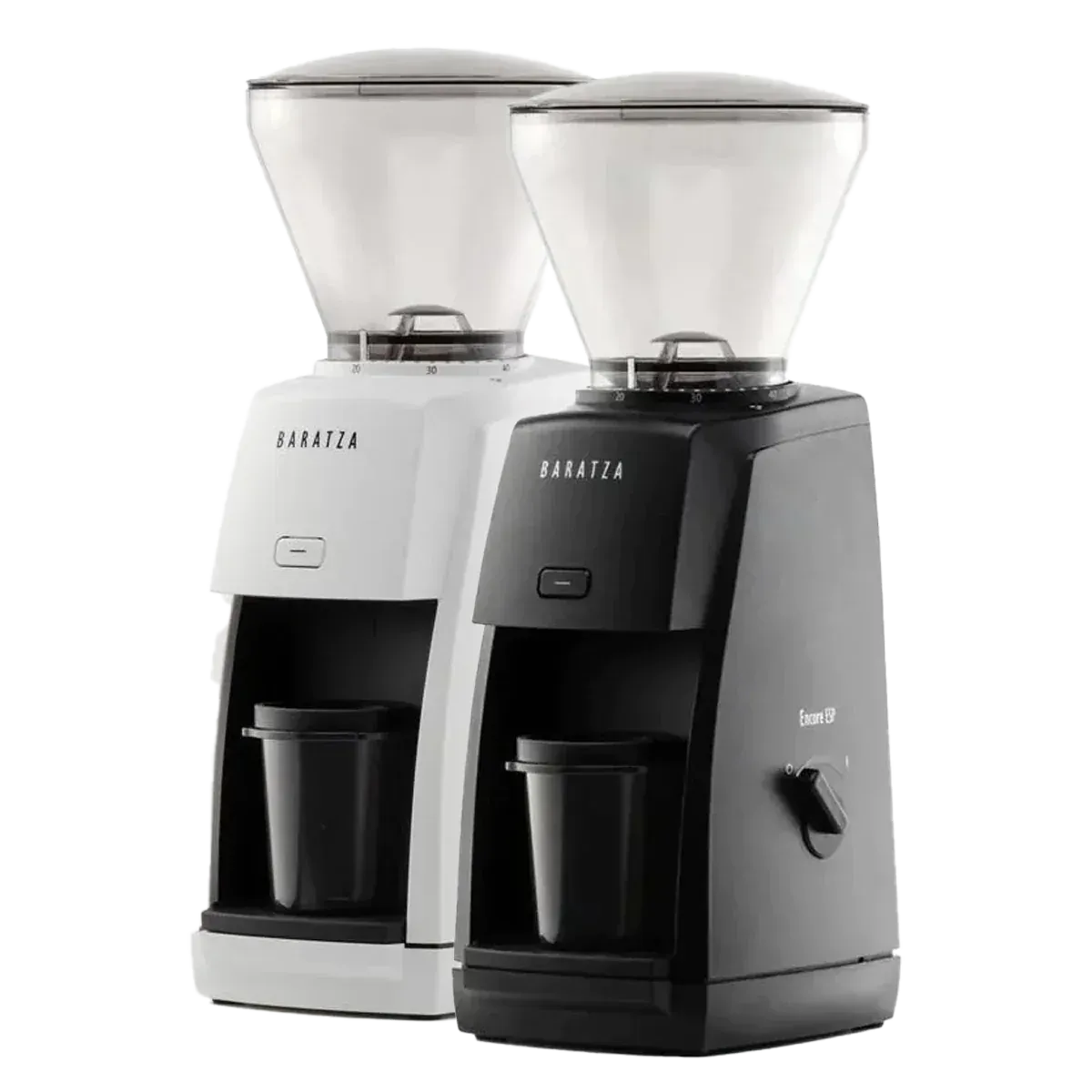
Our best espresso grinder UK guide compares the grinder choices. The Baratza Encore ESP review and Sage Dose Control Pro review cover two accessible electric options. A capable hand grinder can preserve more of the £500 budget for coffee quality if manual grinding suits your routine.
The Bambino Plus and standard Bambino give the most repeatable stock espresso for most new owners. Both document low-pressure pre-infusion and a 9 bar extraction. Both accept single-wall baskets for fresh coffee and dual-wall baskets for pre-ground coffee. Their fixed temperature works best with medium and darker roasts.
The Dedica is easier with supermarket grounds because its stock pressurised baskets create their own resistance. That convenience does not give the same control as a good grinder and single-wall basket. Its 15 bar figure is a pump rating, not evidence that more pressure produces better espresso.
A verified Gaggia E24 has the highest manual and repairable ceiling in this price conversation. The 58 mm ecosystem, brass boiler and conventional construction reward a stable warm-up and grinder. Stock thermostat control can vary across its heating cycle, so the user has to develop a repeatable routine or later consider a carefully installed PID.
For straight espresso, grinder quality can reverse the ranking. A standard Bambino with an excellent grinder can outperform a more expensive machine paired with poor grounds. For repeatable milk drinks, the Bambino Plus remains the clearest winner because the milk system reduces another major variable.
The Bambino Plus is best for milk drinks. Select 1 of 3 milk temperatures and 1 of 3 texture levels, place the supplied 480 ml jug on the sensor and lower the wand. It stops automatically, and manual steaming remains available. Wipe the wand immediately because the automatic purge does not remove baked-on milk.
The standard Bambino uses a manual wand. It can make latte-art microfoam, but you control aeration, vortex and final temperature. This is useful practice for a future manual machine and less convenient at 7am.
The Dedica’s Adjustable Cappuccino System favours hot milk and thicker foam. It can make a satisfying cappuccino without advanced technique, but it is the weakest stock option here for silky flat-white texture.
The Gaggia E24 produces stronger manual steam after its boiler reaches steam temperature. It gives an experienced user control, then requires cooling and refilling the single boiler before the next espresso. That sequence suits one or two deliberate drinks better than a queue of guests.
The two Bambino models have the shortest workflow. Switch on, run a blank shot through the locked portafilter, dry the basket, dose, tamp and brew. The Plus then automates milk; the standard model asks you to steam it manually. Neither can brew and steam at the same time.
The Dedica takes longer to indicate readiness but remains compact and light. Its narrow body helps in a small kitchen, while the light weight means you may need to steady it when locking the portafilter. The small 1.1 L tank also needs more frequent refilling.
The Gaggia needs the most preparation and offers the best conventional repair route. Let the boiler, brass group and portafilter heat properly, follow the same thermostat timing and move between brewing and steaming in sequence. Replacement pumps, thermostats, valves and seals are widely understood by repairers and enthusiasts.
Compact electronic machines trade repairability for speed. Traditional boiler machines trade speed for service access and thermal mass. Neither design guarantees a lifespan. Water quality, descaling practice, steam-wand cleaning and whether faults are repaired all affect ownership.
It still needs a grinder. Automatic milk does not make the machine bean-to-cup. Fresh single-wall espresso still depends on grind adjustment, dose and yield.
The fixed temperature limits roast flexibility. The electronic system controls a target chosen by Sage; the owner cannot select a hotter profile for difficult light roasts.
The drip tray is small. The automatic wand purges into it after steaming. Emptying the tray often is part of owning a compact machine.
Home repair is limited. The ThermoJet, valves, electronics and milk sensor create a convenient appliance that is harder to diagnose than a conventional single-boiler machine.
The milk workflow is fully manual. That saves money and teaches technique, but it is not the fast, repeatable flat-white experience offered by the Plus.
There is no three-way solenoid. Pucks stay wetter, and the portafilter can release pressure messily if removed immediately after brewing.
The included portafilter is less substantial. Sage lists an aluminium portafilter on the standard model, while the Plus receives stainless steel.
The same fixed-temperature limitation applies. Its quick ThermoJet favours convenience and approachable roasts over owner-adjustable temperature.
Stock espresso has a lower ceiling. Pressurised baskets help inconsistent grounds, but they provide less control than fresh coffee in a good single-wall basket.
The 51 mm accessories are less transferable. A future Sage or 58 mm machine requires different baskets, tampers and dosing tools.
The milk system favours foam over fine microfoam. Flat-white drinkers will get a more repeatable result from the Bambino Plus.
Modifications change the proposition. A different basket or wand may improve performance, but cost, fit, safety and warranty become the owner’s responsibility.
Ninth Bar does not claim to have lab-tested these machines. This guide combines current manufacturer specifications with specific owner discussions, then makes a UK buying recommendation based on the stock machine.
The ranking gives most weight to:
Espresso repeatability with a realistic home workflow
Milk performance for common UK flat-white and latte use
Whether the machine normally fits the £500 ceiling
Total setup cost once a grinder is included
Counter space, warm-up and clean-up
Repairability and model-identification risk
Recent UK budget threads repeatedly make the same practical point. Buyers considering the Bambino still need room for a grinder, and a complete £500 setup cannot be judged by machine price alone. See the June 2026 £500 machine-choice discussion and the April 2026 beginner setup discussion for current owner perspectives.
Specifications and retailer positions were checked on 30 July 2026. Prices change, and Ninth Bar’s automated price feed is not treated as proof in this article. Confirm the checkout price and exact model before buying.
The Sage Bambino Plus is the best espresso machine under £500 for most UK buyers. Its 3-second ThermoJet, documented 9 bar extraction and automatic milk system make flat whites repeatable without a long warm-up. Buyers funding a grinder from the same £500 should choose the cheaper Sage Bambino instead.
The Sage Bambino Plus can use pre-ground coffee in its dual-wall baskets, so a grinder is not mandatory on day one. Its best single-wall espresso needs freshly ground beans and small grind adjustments. Buy the machine first only if you have a clear plan to add an espresso-capable grinder.
A complete £500 budget should cover both the machine and grinder unless you already own suitable equipment. Choose the Sage Bambino rather than spending nearly the full allowance on automatic milk. Reserve roughly 35 to 45 percent for grinding, a small scale and essential cleaning supplies.
The Sage Bambino Plus is better for frequent flat whites because it automates milk temperature and texture and includes a three-way solenoid. The standard Bambino is better value for straight espresso, Americanos or a complete fixed-budget setup. Both use ThermoJet heating, 54 mm baskets and 9 bar extraction.
The Sage Bambino is the better stock espresso machine because it documents 9 bar extraction, uses a larger 54 mm basket and supports a stronger fresh-ground workflow. The De’Longhi Dedica is the better choice only when its 14.9 cm width, lower entry cost or compatibility with ESE pods solves a specific constraint.
Some UK promotions bring particular Gaggia Classic E24 colours below £500, while many standard listings remain above it. Confirm the checkout price and request written proof of the 120 cc brass boiler. Do not assume a similarly named 2023 coated-aluminium Classic Evo Pro is the same machine.
The Sage Bambino Plus is the best under-£500 machine for flat whites. Its automatic wand offers 3 milk temperatures and 3 texture levels, then stops against the jug sensor. The standard Bambino and Gaggia E24 can make excellent microfoam manually, while the Dedica favours thicker cappuccino-style foam.
No. A 15 bar number usually describes the pump’s maximum rating, not the pressure maintained at the coffee puck. Sage uses a 15 bar pump to deliver a documented 9 bar extraction. Judge the pressure-control system, temperature, basket and grinder rather than treating the largest pump number as better.
The Gaggia Classic E24 is the easiest machine here to repair because its boiler, pump, thermostats, valves and switches follow a conventional, well-documented layout. The Bambino models and Dedica use compact electronic heating systems that prioritise speed and size. Easier repairability does not guarantee fewer faults.
The best espresso machine under £500 UK is the Sage Bambino Plus for a machine-only budget. It gives the typical UK buyer the shortest path to repeatable espresso and flat whites, while remaining compact enough for a normal kitchen. Run a blank shot, use fresh coffee and pair it with a capable grinder.
Choose the standard Sage Bambino when the same £500 must also fund that grinder. Its manual steam wand and messier puck clean-up are fair trade-offs if the saving improves the grounds going into every shot.
Choose the De’Longhi Dedica Style EC685 when 14.9 cm of width or the lowest entry spend decides the purchase. Consider a Gaggia Classic E24 only when the seller proves the brass boiler and the actual price is below the cap.
The recommendation is deliberately clear. Buy the Bambino Plus if you want fast milk drinks, the Bambino for a balanced complete setup, or the Dedica for a constraint the Sage machines cannot meet. This is the machine for a buyer who wants the fewest compromises under the cap.
Still the pick: Sage Bambino Plus
Affiliate link
Affiliate link