TL;DR
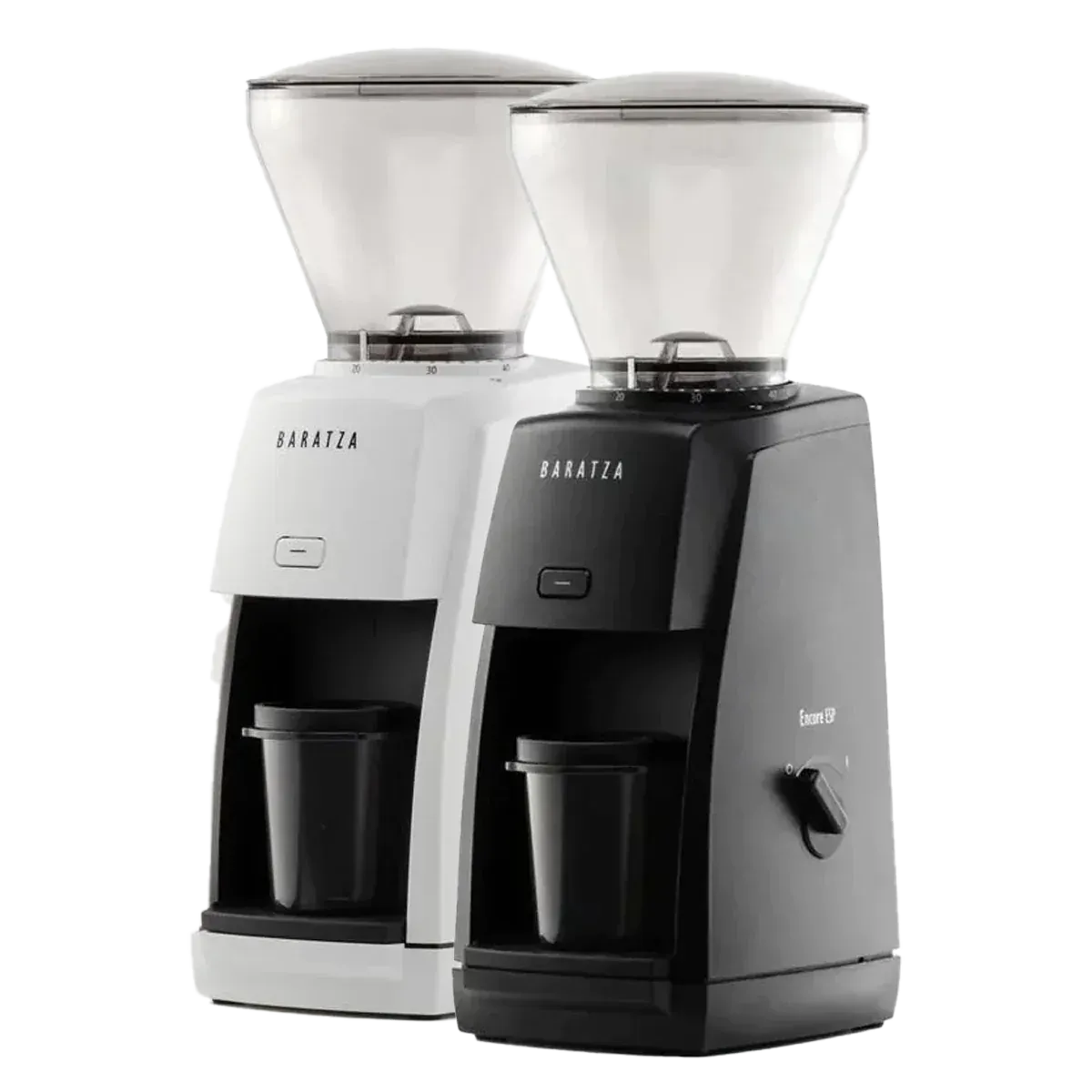
- Buy the Baratza Encore ESP for most setups. Its 20-step espresso range and 20-step filter range make it the more useful long-term grinder.
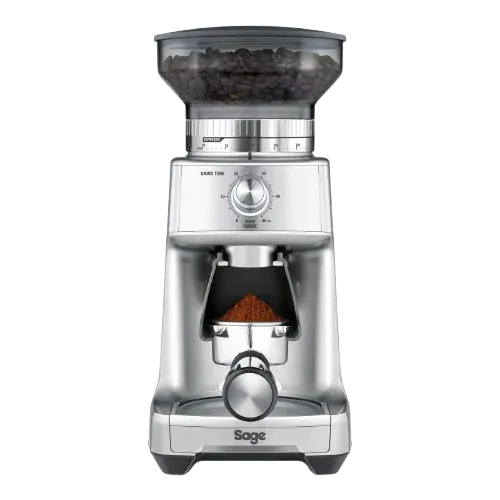
- Buy the Sage Dose Control Pro for a Sage espresso-only setup. Its 60 settings, timer and portafilter cradles make repeat mornings easier.
- Neither is a precision single-dose grinder. The Encore ESP needs tapping to clear its chute, while the Sage holds 3.4 g internally in laboratory measurement.
Quick Verdict: Baratza Encore ESP vs Sage Dose Control Pro
The Baratza Encore ESP wins overall. It is the safer first grinder for someone upgrading from pre-ground coffee because it can follow you from espresso to AeroPress, pour-over or French press. The adjustment system is easy to understand, the included dosing cup works with Sage-sized baskets, and the settings are repeatable when you return to espresso.
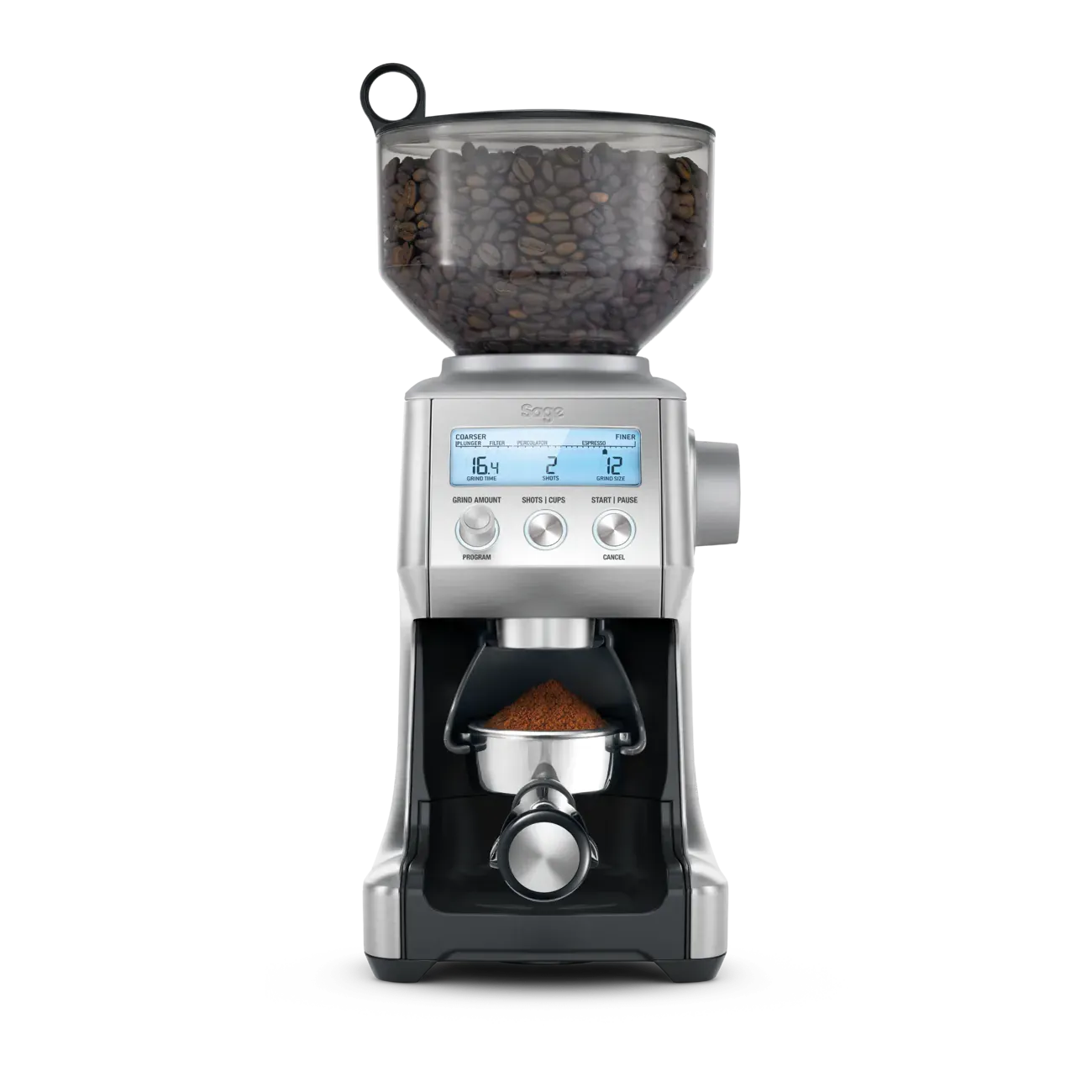
The Sage Dose Control Pro wins on hopper-fed espresso workflow. It offers 60 grind settings, starts from a timed dose and includes cradles for 50 to 54 mm and 58 mm portafilters. If your morning is always the same medium-roast espresso beside a Sage Bambino, that direct-to-basket routine is useful rather than cosmetic.
Who the Baratza Encore ESP Is Best For
Choose the Baratza Encore ESP if:
- This is your first serious electric grinder.
- You make espresso and at least one filter method.
- You weigh individual doses or change beans regularly.
- You want simple, repeatable stepped adjustment.
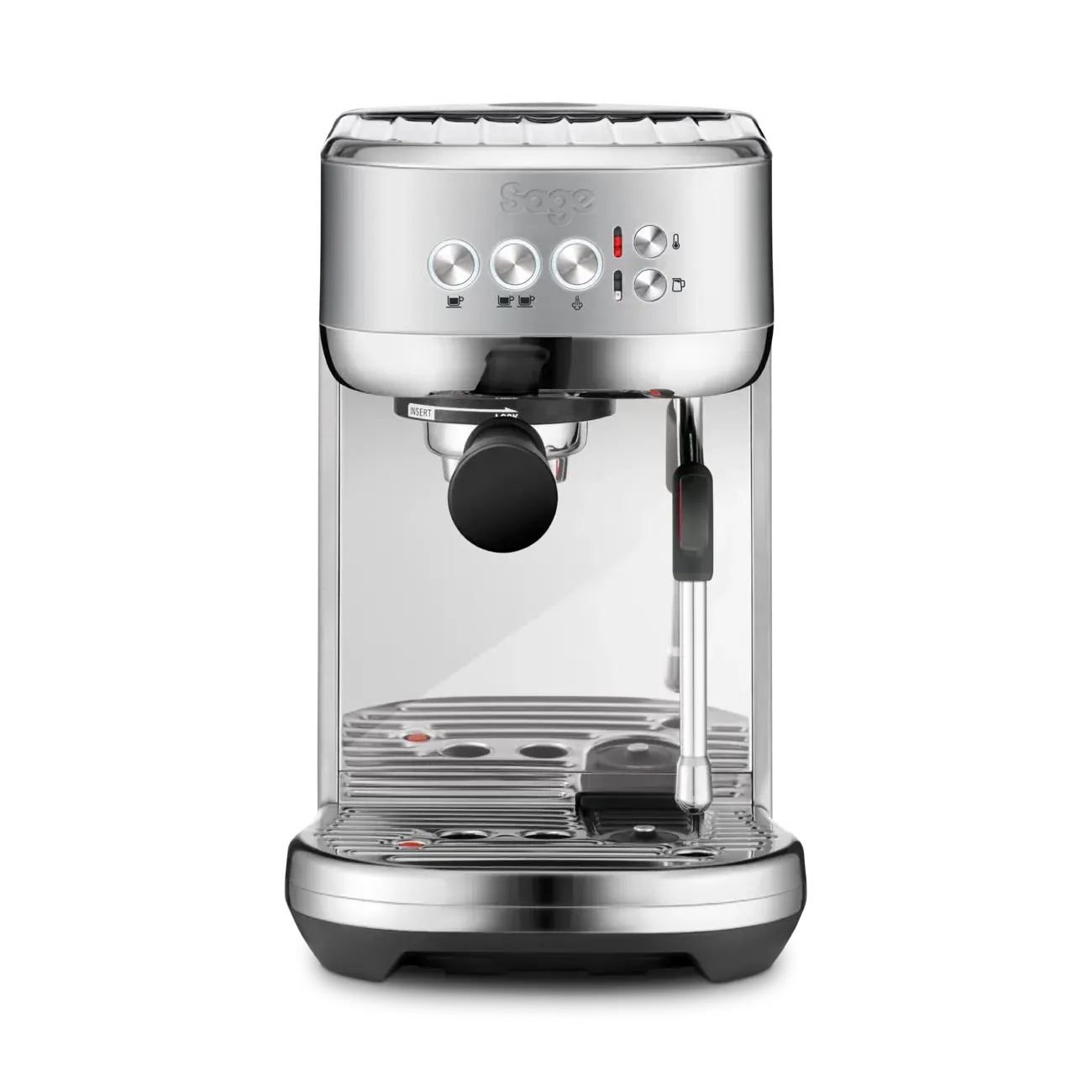
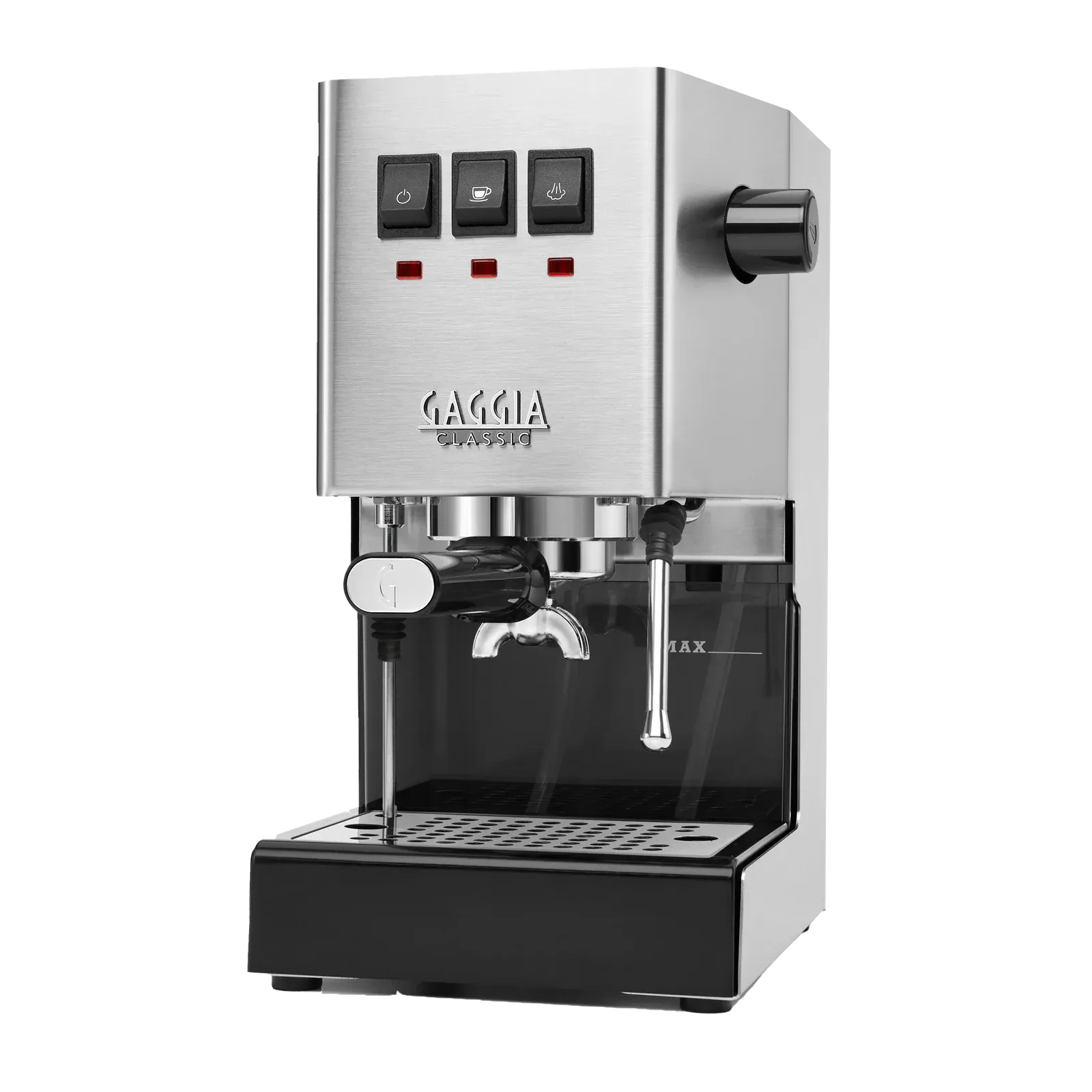
- You pair it with a Sage Bambino, Bambino Plus or Gaggia Classic.
- You can tolerate a loud, lightweight grinder.
Who the Sage Dose Control Pro Is Best For
Choose the Sage Dose Control Pro if:
- You own a Sage machine and want to grind into its portafilter.
- You drink espresso from medium or dark roasts.
- You leave one bag of beans in the hopper.
- You prefer a timed dose to weighing every portion.
- You value more adjustment positions inside the espresso range.
- You rarely make filter coffee.
Key Differences at a Glance
| Feature | Baratza Encore ESP | Sage Dose Control Pro |
|---|---|---|
| Best for | Espresso plus filter | Hopper-fed espresso |
| Burrs | 40 mm M2 conical steel | Conical stainless steel |
| Adjustment | 40 stepped settings | 60 stepped settings |
| Espresso range | Settings 1 to 20 | Fine range starts at setting 1 |
| Filter range | Settings 21 to 40 | Available, but lab results are weak |
| Motor | 70 W | 130 W |
| Grind rate | 1.3 to 2.2 g/s | 17.2 g in 10 seconds in lab measurement |
| Burr speed | 550 RPM | Not published by Sage |
| Hopper | 300 g | 340 g |
| Dosing | Manual switch or pulse button | Timer in 1-second increments |
| Portafilter workflow | Dosing cup with 58 mm adapter | 50 to 54 mm and 58 mm cradles |
| Published dimensions | 13 × 15 × 34 cm | 20.4 × 16 × 34.2 cm |
| Measured noise | Loud in owner reports | 82.1 dB in lab measurement |
The settings totals are not directly comparable. Sixty positions do not automatically make the Sage better than a 40-position grinder. What matters is where those adjustments sit and whether the grinder remains useful outside espresso.
Espresso Adjustment and Shot Consistency
The Dose Control Pro gives you more labelled positions, but the Encore ESP gives its first 20 settings a finer adjustment pitch specifically for espresso. Both can choke a home espresso machine when calibrated correctly. Both can also leave you between settings with a difficult light roast.
For medium and dark roasts, the Encore ESP is easier to recommend. Long-term owners report pulling balanced shots from medium roasts without fighting the collar. If a shot needs a half-step that the collar cannot provide, nudging the dose up or down slightly can bridge the gap.
The Sage has credible espresso performance too. Kaffeemacher’s laboratory analysis found a narrow main particle peak around 202 microns, although the fines share reached 25.5%. Repeated shots also varied despite using the same recipe and setting.
If you mainly drink light-roast single origins, neither is the clean answer. The Encore ESP’s steps may feel too wide, while the Sage’s fines and shot-to-shot variation work against clarity. A stepless grinder is the more sensible upgrade path for that specific buyer.
Espresso and Filter Versatility
The Encore ESP wins this section clearly. Baratza designed the adjustment collar as two linked ranges: espresso from 1 to 20, then filter from 21 to 40. The 40 mm M2 burr, 550 RPM speed and repeatable numbered collar make changing methods simple enough to do every day.
Sage says the Dose Control Pro can grind from espresso to French press. The issue is cup quality, not whether the burrs can move far enough. Kaffeemacher found excessive fines at coarse settings, with filter brews that tasted weak and watery alongside unpleasant bitterness. An owner of both Sage and Baratza grinders reported the same problem with pour-over and French press.
If one person makes espresso and another makes filter, buy the Encore ESP. The Dose Control Pro only makes sense when filter is an occasional backup rather than half the job.
Retention and Single-Dosing
Neither grinder was designed as a modern bellows-driven single doser, so retention needs context. It includes both coffee held inside the grinder and exchange, where yesterday’s grounds leave as today’s beans enter.
Kaffeemacher measured 3.4 g of internal retention in the Sage, while an empty-hopper test averaged about 0.3 g missing from each dose. Those figures can coexist because a seasoned chamber exchanges old grounds for new ones.
That distinction matters. A hopper user grinding the same beans each morning may see a reasonably stable output weight. Someone switching beans or chasing a clean 18.0 g single dose inherits stale exchange and needs to purge.
Encore ESP owner reports vary. Some see roughly 0.1 to 0.3 g difference once the grinder is seasoned, especially after a light water spritz and a tap on the hopper. Other owners report several grams disappearing into the clean grinder on its first dose, then near-equal input and output afterwards. The honest conclusion is not that the Encore has zero retention. It is that its dosing-cup workflow is easier to adapt for single doses, while both grinders benefit from tapping and occasional cleaning.
Dosing and Daily Workflow
The Dose Control Pro is the quicker routine when the hopper stays full. Set the grind time, place the portafilter in the matching cradle, press start, pause if the mound needs settling, then tamp. Sage’s manual allows a pause of up to 10 seconds and manual grinding by holding the start button.
The timer changes in 1-second increments, and Kaffeemacher measured 17.2 g in 10 seconds. Ten repeated doses drifted from 18.2 g down to 17.2 g, so a scale remains necessary for precise recipes.
The Encore ESP asks you to control the dose yourself. Put beans in the hopper, turn the side switch or hold the front pulse button, then catch the grounds in the included cup. An owner on r/espresso found 18 g took roughly 10 seconds and praised the cup for making distribution less messy.
There is no timer to drift, but there is no walk-away dosing either. The Encore rewards weighing first. The Sage rewards filling the hopper.
Build, Noise and Counter Space
The Encore ESP is the smaller grinder at 13 cm wide and 15 cm deep. That matters in a UK kitchen where the grinder may need to share a narrow counter with a Bambino Plus and kettle. Its 34 cm height still needs clearance to remove the hopper.
It also feels light and sounds harsh. Owners call it plasticky, noisy and wobbly, even when they like the coffee it produces. Reports of the hopper lid lifting, the side switch coming loose and the collar shifting during grinding are common enough to treat as real annoyances rather than isolated nit-picks.
The Dose Control Pro is wider at 20.4 cm but gives that space back through a more integrated portafilter cradle and removable tray. Kaffeemacher measured it at 82.1 dB, which is not quiet in absolute terms. It is simply less shrill than the owner descriptions of the Encore ESP.
Both carry a 2-year manufacturer warranty in the UK. Each also provides access to the upper burr for calibration.
What’s Actually Bad About Each Grinder
Baratza Encore ESP Downsides
The espresso steps can be too wide. Owners sometimes find one setting fast and the next slow, especially with light roasts. A small dose adjustment can rescue a recipe, but a stepless grinder solves the underlying problem.
It is loud and feels cheap. The plastic shell, large switch click and light chassis make the Encore ESP feel less substantial than its grind performance suggests. If quiet early-morning grinding matters, the Dose Control Pro is the less abrasive option.
Retention changes after cleaning. The first dose into a clean chamber can leave several grams behind before the grinder reaches a stable exchange. Anyone changing beans should purge or accept that the first shot mixes coffees.
Sage Dose Control Pro Downsides
Filter performance is the wrong kind of versatile. The collar reaches French press settings, but laboratory and owner reports agree that excessive fines muddy coarse brews. The Encore ESP is the better single grinder for multiple methods.
The 1-second timer is too coarse for precision. Output that drifted by more than a gram across ten repeated doses means the number on the dial is a convenience setting, not a substitute for scales.
The grinder holds 3.4 g internally. That is manageable with one bean in the hopper, but awkward for single-dosing or frequent bean changes. The Encore ESP’s cup and manual controls fit those habits better.
Which Grinder Pairs Better With Your Machine?
Both grinders pair with a Sage Bambino Plus. The Dose Control Pro holds its 54 mm portafilter directly, while the Encore ESP transfers through a matching dosing cup. Pick the Encore unless you know you want hopper-fed espresso only.
The Encore ESP is the more natural match for the Gaggia Classic Evo Pro. Its included 58 mm adapter suits the Gaggia’s standard basket. The Sage’s 58 mm cradle works, but removes the ecosystem advantage that makes it worth choosing.
FAQ
Is the Baratza Encore ESP better than the Sage Dose Control Pro?
The Baratza Encore ESP is better for most buyers because it covers espresso and filter with separate adjustment ranges. The Sage Dose Control Pro is better for a narrower espresso-only routine where beans stay in the hopper and the user wants timed grinding directly into a Sage portafilter.
Which grinder is better for a Sage Bambino Plus?
The Baratza Encore ESP is the better all-round pairing for a Sage Bambino Plus because its dosing cup fits the 54 mm workflow and the grinder also handles filter coffee. The Dose Control Pro is preferable only when direct-to-portafilter timed dosing matters more than brew-method versatility.
Can the Baratza Encore ESP grind fine enough for espresso?
The Baratza Encore ESP can grind fine enough for espresso using settings 1 to 20 and its 40 mm M2 conical burr. Baratza suggests setting 15 as a starting point for an 18 g medium-roast dose. The final setting changes with bean age, roast and basket resistance.
Can the Sage Dose Control Pro make good espresso?
The Sage Dose Control Pro can make good espresso from medium and dark roasts. It offers 60 settings and can grind fine enough to choke a home machine. Kaffeemacher found a narrow main particle peak, but also measured 25.5% fines and variation between repeated shots.
Which grinder is better for filter coffee?
The Baratza Encore ESP is better for filter coffee because settings 21 to 40 are designed for AeroPress, pour-over, automatic brewer and French press. The Sage reaches coarse settings, but independent laboratory brewing found excessive fines, slow flow and a combination of weak extraction and unpleasant bitterness.
Which grinder has lower retention?
The Baratza Encore ESP is easier to use for single doses, but its retained amount varies with seasoning, cleaning and tapping. Kaffeemacher measured 3.4 g inside the Sage Dose Control Pro and about 0.3 g missing during steady-state single dosing. Neither grinder offers a true zero-retention workflow.
Is the Sage Dose Control Pro quieter than the Baratza Encore ESP?
The Sage Dose Control Pro is likely the less abrasive grinder, although comparison conditions matter. Kaffeemacher measured the Sage at 82.1 dB. Baratza does not publish a directly comparable noise result, but Encore ESP owners repeatedly describe its plastic chassis as loud, rattly and harsh on a countertop.
Which grinder is better for light-roast espresso?
Neither grinder is ideal for demanding light-roast espresso. The Encore ESP can leave the ideal flow between two stepped settings, while the Dose Control Pro produces a relatively high share of fine particles and varied repeated shots. A stepless espresso grinder is the better purchase for that use.
Final Verdict: Baratza Encore ESP vs Sage Dose Control Pro
Buy the Baratza Encore ESP for most UK home setups. This is the choice for buyers who want a straightforward first espresso workflow, honest filter capability and a grinder that remains useful as their coffee habits expand.
Buy the Sage Dose Control Pro if your routine is narrower and you like it that way. With one medium or dark roast in the hopper, a Sage portafilter in the cradle and no filter brewing to cover, its 60 settings and timed button make sense. Outside that specific routine, the Encore ESP is the better long-term choice.
If you’re weighing the Encore ESP against Sage’s step-up grinder with a dosing timer instead, read the Sage Smart Grinder Pro vs Baratza Encore ESP comparison. For the wider shortlist and the grinders not yet ranked, read the best espresso grinder UK guide.