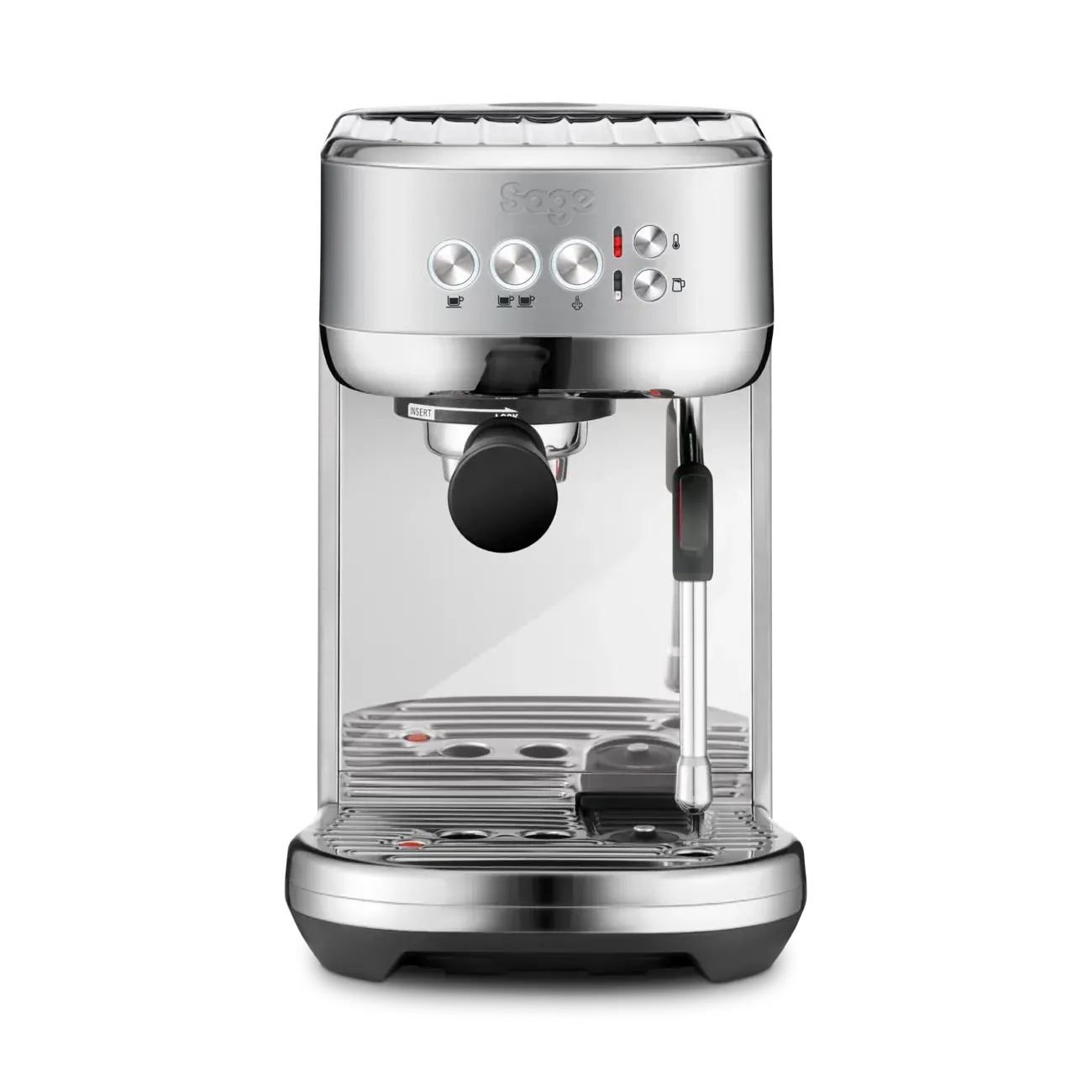
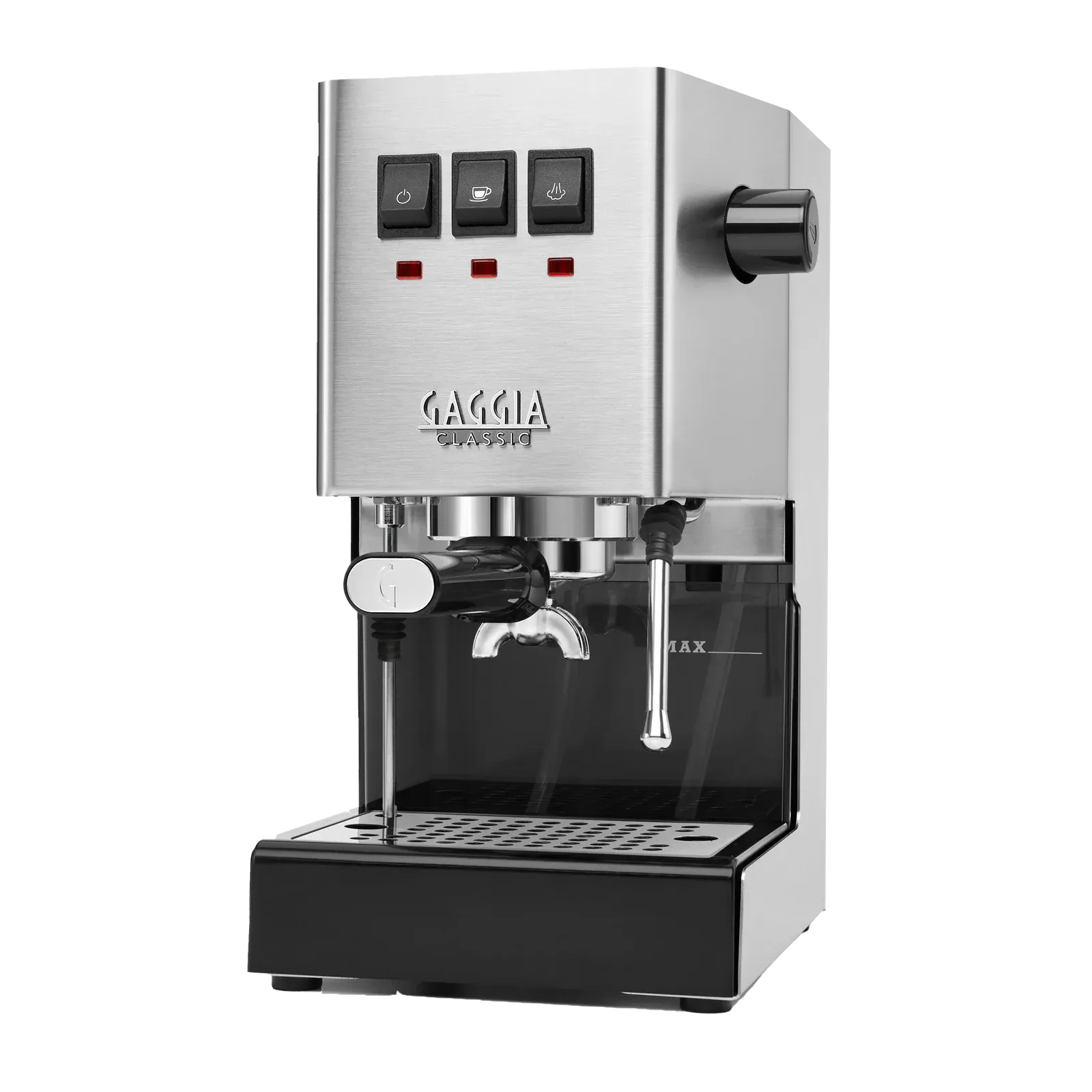
This comparison covers the 2023 UK and European Classic Evo, not the later brass-boiler E24 or the 2026 Classic UP. That distinction changes the decision. The Gaggia name now appears on several different boiler versions, while the Bambino Plus remains one clearly specified product.
TL;DR
Best for most buyers: Sage Bambino Plus
Best for fast flat whites: Sage Bambino Plus
Best for repairability and 58 mm accessories: a verified Gaggia Classic Evo Pro
Important: do not buy an Evo from a vague listing. Confirm whether it has a coated aluminium, uncoated aluminium or E24 brass boiler.
Quick Verdict: Sage Bambino Plus vs Gaggia Classic Evo Pro
Buy the Sage Bambino Plus if you want good medium-roast espresso and repeatable milk drinks without turning the machine into a hobby. Its ThermoJet heater reaches extraction temperature in 3 seconds, the automatic wand offers 3 milk temperatures and 3 texture levels, and low-pressure pre-infusion leads into a 9 bar extraction. Run a blank shot first to warm the portafilter and group.
Buy the Gaggia Classic Evo Pro if the machine itself is part of the hobby. It has a 58 mm stainless steel portafilter, brass group, three-way solenoid valve and professional two-hole steam wand. It is easier to service and modify, but the stock machine lacks a PID, requires a longer thermal warm-up and cannot be assumed to have the same OPV setup as a US model.
If you are undecided, buy the Sage. The Gaggia only wins when repairability, 58 mm compatibility and hands-on control matter enough to justify model checks and a slower routine.
The Decision in One Table
| Buying question | Sage Bambino Plus | 2023 Gaggia Classic Evo Pro | Winner |
|---|---|---|---|
| Heater or boiler | ThermoJet | Single coated aluminium boiler | Depends on workflow |
| First ready indication | 3 seconds | A few minutes | Sage |
| Sensible thermal routine | One blank shot | Roughly 10 to 15 minutes | Sage |
| Brew pressure | 9 bar extraction from 15 bar pump | 15 bar nominal pump; verify OPV | Sage for certainty |
| Temperature control | Electronic PID, fixed by Sage | Thermostats, no PID | Sage in stock form |
| Portafilter | 54 mm stainless steel | 58 mm stainless steel | Gaggia |
| Milk system | Automatic or manual, four-hole tip | Manual, two-hole tip | Sage for ease |
| Water tank | 1.9 L | 2.1 L | Gaggia |
| Width | 19.4 cm | 23 cm | Sage |
| Weight | About 4.9 kg | 7.3 kg | Gaggia feels more planted |
| User repairability | Limited | Strong parts and documentation | Gaggia |
| Boiler identity risk | None beyond normal listing checks | 2023 coating history and mixed later listings | Sage |
| Grinder included | No | No | Tie |
Sage confirms the Bambino Plus figures on its UK product page and in the UK instruction manual. Gaggia’s 2023 technical sheet lists the Evo’s 2.1 L tank, 23 × 38 × 24 cm dimensions, 7.3 kg weight, 15 bar nominal pump and coated traditional boiler.
Which Machine Suits You?
Buy the Sage Bambino Plus If
-
You mainly make flat whites, lattes or cappuccinos
-
You want the machine ready while you grind and dose
-
Automatic milk texture is more useful than learning manual steaming
-
A 19.4 cm-wide machine suits your counter
-
You prefer a documented stock workflow over internal modifications
-
Medium and darker roasts make up most of your coffee
The Bambino Plus is easier, not automatic from bean to cup. You still need to grind, dose, tamp and judge the yield. Its advantage is removing boiler warm-up and most milk-texturing uncertainty from that routine.
Buy a Verified Gaggia Classic Evo Pro If
-
You want to learn manual espresso and milk technique
-
You already own, or intend to keep, 58 mm baskets and tools
-
Repairable parts matter more than instant readiness
-
You are comfortable using a consistent temperature routine
-
You may add a PID or other modification after the warranty
-
The seller can document the boiler and OPV setup
The word “verified” is essential. Gaggia UK’s Classic boiler history says 2023 machines used non-stick coated aluminium, polished aluminium returned in April 2024, and the E24 later introduced a 120 ml lead-free brass boiler. Similar cases and listing names do not guarantee identical internals.
Espresso Performance
Sage Wins for Stock Consistency
The Bambino Plus gives a beginner fewer variables to manage. Sage sets the brew temperature electronically, applies low-pressure pre-infusion and then extracts at 9 bar. The one-cup and two-cup buttons are volumetric and programmable, although a scale remains the better way to stop at a chosen yield.
The 3-second claim applies to water at the ThermoJet, not every metal part. A blank shot through the locked portafilter warms the low-mass group and cup. A detailed Bambino temperature discussion shows why owners use this small extra step.
With a capable grinder, the Sage is well suited to medium and darker roasts. Its fixed temperature gives less control over demanding light roasts, and the low-mass group loses heat more easily than a fully warmed traditional machine. Milk drinks make those small differences less noticeable.
Gaggia Has the Higher Manual Ceiling
The Classic Evo’s 58 mm basket, brass group and conventional boiler reward a careful routine. Give the machine and portafilter time to warm, use the same thermostat timing before each shot, and adjust grind based on taste. The three-way solenoid releases pressure after brewing and leaves a drier puck.
Stock temperature control is the weakness. The brew light reports the thermostat cycle, not a chosen numerical temperature. Two shots started at different points in that cycle can behave differently. A PID improves repeatability, but modified performance should not be presented as what the standard machine delivers.
Gaggia also needs a pressure caveat. The UK technical sheet gives the pump’s nominal 15 bar rating, while the OPV limits pressure in the circuit. Some specialist sellers install a 9 bar spring, but buyers should not copy the US specification onto every UK machine. Ask what is fitted.
Which Produces Better Espresso?
The Sage produces the more repeatable stock result for most new owners. The Gaggia offers more control and a larger accessory ecosystem, but only rewards those advantages when the grinder, warm-up and technique are consistent.
A modified Gaggia can exceed the Sage’s temperature and pressure control. That comparison includes extra cost, installation risk and a different machine specification. Out of the box, the Bambino Plus wins on consistency; as a long-term enthusiast platform, the Gaggia wins.
Milk Drinks
Bambino Plus Is Easier
Automatic milk is the strongest reason to buy the Sage. Place the supplied 480 ml jug on its temperature sensor, choose 1 of 3 temperatures and 1 of 3 texture levels, then lower the wand. The machine stops automatically and purges when the wand returns to its lowered position.
The four-hole tip can make microfoam suitable for latte art, and manual mode remains available. Steam is gentler than on a larger boiler machine, but repeatability matters more for a weekday flat white. Wipe the wand immediately and empty the small drip tray because the automatic purge adds water after every milk drink.
Gaggia Teaches Manual Steaming
The Evo has a professional stainless steel wand with a two-hole tip rather than a Panarello attachment. Purge condensation, introduce air near the milk surface, then sink the tip slightly to create a whirlpool.
Gaggia’s manual says the steam light appears after roughly 15 to 20 seconds and recommends no more than 60 seconds of continuous steam. The real delay includes switching from brew temperature, purging and cooling the boiler afterwards. The manual instructs owners to dispense hot water through the group before the next espresso.
The Gaggia gives a practised user direct control and more forceful steam. The Sage makes a good result easier. For anyone buying primarily for milk drinks, the Bambino Plus wins.
Warm-Up and Morning Workflow
The Sage routine is shorter:
-
Switch on the machine.
-
Lock in the empty portafilter and run a blank shot.
-
Dry the basket, add freshly ground coffee and tamp.
-
Pull the espresso, then texture milk automatically or manually.
-
Wipe the wand and empty purge water from the tray.
The Gaggia routine requires more planning:
-
Switch on with the portafilter locked in.
-
Allow roughly 10 to 15 minutes for the group and portafilter to warm.
-
Use the same short flush and thermostat timing before each shot.
-
Pull the espresso, switch to steam and purge the wand.
-
Texture the milk manually, then cool and refill the boiler.
Neither machine can brew and steam simultaneously. Both suit 1 or 2 drinks better than a household queue. The Sage changes modes faster; the Gaggia’s boiler produces stronger steam once ready.
Build, Repairability and Expected Ownership
The Gaggia has the clearer repair advantage. Its metal case, boiler, pump, valves and switches follow a well-documented layout, and UK specialists sell replacement parts. A competent owner or technician can service individual components rather than treating every fault as the end of the machine.
The Bambino Plus uses a compact ThermoJet, electronic controls, valves and an automatic milk system. Those parts deliver speed in a small body but are harder to diagnose and repair at home. Sage’s current UK documentation provides a 2-year guarantee, which reduces early risk without making the product a rebuildable platform.
Repairability is not the same as guaranteed longevity. An ignored Gaggia can scale, leak or corrode, while a well-maintained Sage can provide years of service. The honest distinction is that the Gaggia gives an owner more practical repair routes after a fault.
The Gaggia Boiler Problem
Some 2023 Classic Evo owners reported black coating flakes in water from the steam wand. One European owner report describes a boiler replacement through an official importer. These accounts do not prove every machine fails or establish that the coating is toxic, but they are relevant to a purchase decision.
Gaggia UK’s own 2023 Evo article confirms that the traditional aluminium boiler received a non-stick coating. Its later boiler history separates those machines from the 2024 polished aluminium and E24 brass versions.
Before buying an Evo, request:
-
A photo of the model plate and serial number
-
Written confirmation of the fitted boiler material
-
Any boiler replacement or service paperwork
-
The installed OPV specification
-
A video showing clean water from the group and steam wand
If a seller cannot answer, choose the Bambino Plus or compare a clearly identified E24. Do not pay a current-model premium for unknown hardware.
Grinder and Total Setup
Both machines need a separate espresso-capable burr grinder. This is more important than adding a bottomless portafilter, precision shower screen or expensive tamper. Start around an 18 g dose, weigh the espresso yield and change grind size before buying accessories.
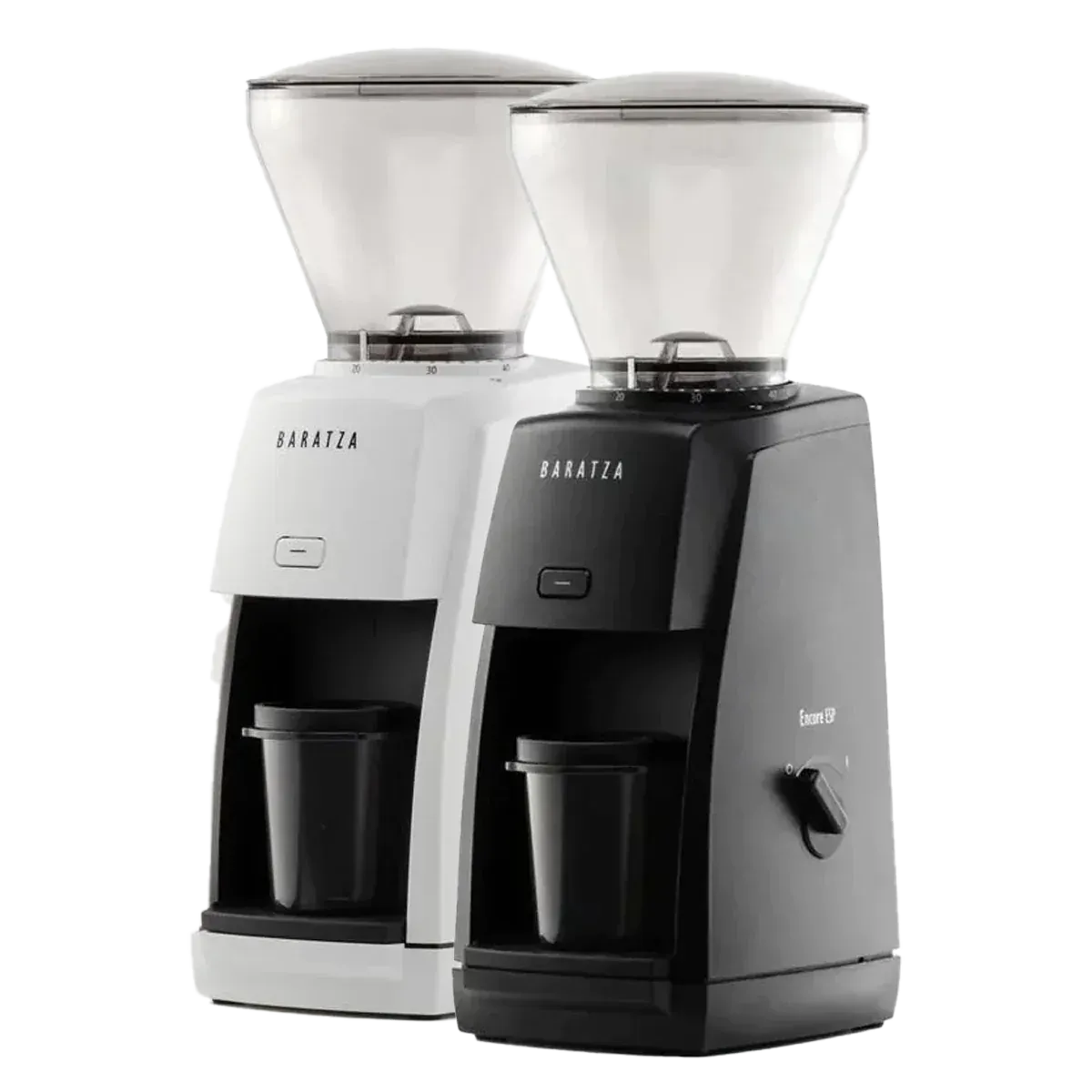
The Baratza Encore ESP is our accessible all-round pairing for either machine. Its espresso adjustment range works with the Sage’s 54 mm basket and Gaggia’s 58 mm basket, and it remains useful for filter coffee. Our best espresso grinder UK guide explains the alternatives and trade-offs.
The Gaggia’s 58 mm tools can carry into many prosumer machines later. Sage-compatible 54 mm baskets, funnels and bottomless portafilters are widely available, but size-specific tools will not transfer to a 58 mm upgrade. That is a real ecosystem difference, not a reason to buy accessories immediately.
What’s Actually Bad About Each Machine?
Sage Bambino Plus Downsides
The fixed temperature favours easier roasts. Electronic PID control does not mean the owner can select a brew temperature. Medium and darker roasts are the natural fit. Regular light-roast espresso calls for more temperature control and thermal mass.
The drip tray fills quickly. Automatic wand purging sends water into a shallow tray after every milk drink. The compact dimensions create this compromise. Emptying it immediately is easier than carrying a nearly overflowing tray.
Repairability is limited. The appliance-style layout is more dependent on Sage service than the Gaggia’s conventional parts. That matters after the guarantee, especially if the automatic milk system or electronics develop a fault.
The 54 mm tools may not transfer. The current ecosystem is broad enough for normal ownership, but baskets and tampers bought for this machine will not fit a later 58 mm group.
Gaggia Classic Evo Pro Downsides
The 2023 boiler history adds buying risk. Coating-flake reports and overlapping later listings make hardware verification essential. A product title alone cannot settle which boiler is installed.
Stock temperature control is crude. No PID means learning a thermostat routine or accepting more variation. Adding a PID changes cost, warranty position and electrical risk.
Pressure claims are confusing. UK buyers cannot assume the US model’s 9 bar OPV. Pump rating and brew pressure are different figures, and retailer modifications create more variation.
The single-boiler workflow is slow. Warm-up, brewing, steaming and cooling happen in sequence. It works well for one deliberate drink and becomes tedious for several.
Sage Bambino Plus vs Gaggia E24
The E24 is not the machine named in this page’s title. It retains the Gaggia’s rocker switches, 58 mm format and manual workflow but uses a 120 ml lead-free brass boiler. Gaggia UK says the larger thermal mass improves temperature stability and steam duration.
The E24 still lacks a factory PID and pressure gauge. It is a cleaner new-buy comparison with the Sage than an unidentified 2023 Evo, but the same basic choice remains: Bambino Plus for automatic milk and speed, Gaggia for repairability, 58 mm hardware and manual control.
The 2026 Classic UP goes further with two PIDs, adjustable brew temperature, pre-infusion controls, pressure gauge and shot timer. It belongs to another price and feature tier and should not be used to describe the Evo.
FAQ
Is the Sage Bambino Plus or Gaggia Classic Evo Pro better for beginners?
The Sage Bambino Plus is better for most beginners because its 3-second ThermoJet, automatic milk and fixed electronic temperature remove several variables. The Gaggia suits a beginner who specifically wants espresso as a hands-on hobby and accepts warm-up, temperature surfing, manual steaming and checking the exact boiler before purchase.
Which machine makes better espresso?
The Bambino Plus makes the more repeatable stock espresso for most new owners, particularly with medium and darker roasts. The Gaggia Classic Evo Pro has a higher manual and modified ceiling because of its 58 mm group and upgrade path, but it needs a stable warm-up routine and a verified pressure setup.
Which machine is better for flat whites?
The Sage Bambino Plus is better for flat whites because its four-hole automatic wand offers 3 milk temperatures and 3 texture levels, then stops by itself. The Gaggia’s two-hole professional wand can make excellent microfoam, but it requires manual technique and a slower single-boiler transition between brewing and steaming.
Does the Gaggia Classic Evo Pro have a Panarello wand?
No. The 2023 Classic Evo has a professional stainless steel steam wand with a two-hole tip. It is fully manual and capable of latte-art microfoam, although learning tip depth, aeration and whirlpool control takes more practice than Sage’s automatic system.
Does the Gaggia Classic Evo Pro have a 9 bar OPV in the UK?
Do not assume it does. Gaggia’s UK technical sheet lists a 15 bar nominal pump, while the OPV limits circuit pressure. Some specialist UK sellers install a 9 bar spring before delivery. Ask the seller to confirm the exact setup rather than copying specifications from a US Evo Pro review.
Does the Sage Bambino Plus need a grinder?
Yes. The Bambino Plus includes dual-wall baskets that can tolerate pre-ground coffee, but its best single-wall espresso needs freshly ground beans and small grind adjustments. The Gaggia also needs a grinder. Budget for an espresso-capable burr grinder and a scale before spending on portafilter or distribution upgrades.
Is the Gaggia Classic Evo Pro more reliable than the Bambino Plus?
The Gaggia is easier to repair, but that does not prove every unit is more reliable. Its conventional parts and service documentation give owners more options after a fault. The 2023 coated-boiler history is also a real concern. The Sage is harder to repair but carries a 2-year UK guarantee.
Should I buy the Gaggia Classic E24 instead of the Evo Pro?
For a new Gaggia purchase, a clearly identified E24 is easier to recommend than an unknown 2023 Evo because it has a 120 ml brass boiler and avoids the coated-boiler question. It still lacks a PID and keeps the same manual single-boiler workflow, so the Bambino Plus remains better for speed and automatic milk.
Can either machine brew and steam at the same time?
No. The Bambino Plus changes quickly between extraction and steam through one ThermoJet water path, while the Gaggia raises one boiler from brew to steam temperature. Both suit 1 or 2 drinks. A household routinely making several milk drinks needs a dual-heater or dual-boiler machine for simultaneous work.
Final Verdict: Sage Bambino Plus vs Gaggia Classic Evo Pro
The Sage Bambino Plus vs Gaggia Classic Evo Pro decision has one default answer: buy the Sage if you want excellent weekday flat whites with minimal delay. Its 3-second heater, 9 bar extraction, automatic milk and clear current specification make it the safer recommendation for most UK buyers.
Buy a Gaggia Classic Evo Pro only if this is the machine for your enthusiast priorities: 58 mm accessories, manual steam, repairability and future modification. Verify the boiler, OPV and service history before paying. If those details are unavailable, the Gaggia’s theoretical long-term advantages do not outweigh the uncertainty.
Read the full Sage Bambino Plus review or Gaggia Classic Evo Pro review before buying. For the wider market, the best espresso machine under £500 UK guide places this decision in context.
Our verdict is based on current manufacturer documentation, UK distributor specifications and specific owner discussions. Ninth Bar does not claim a hands-on test.