TL;DR
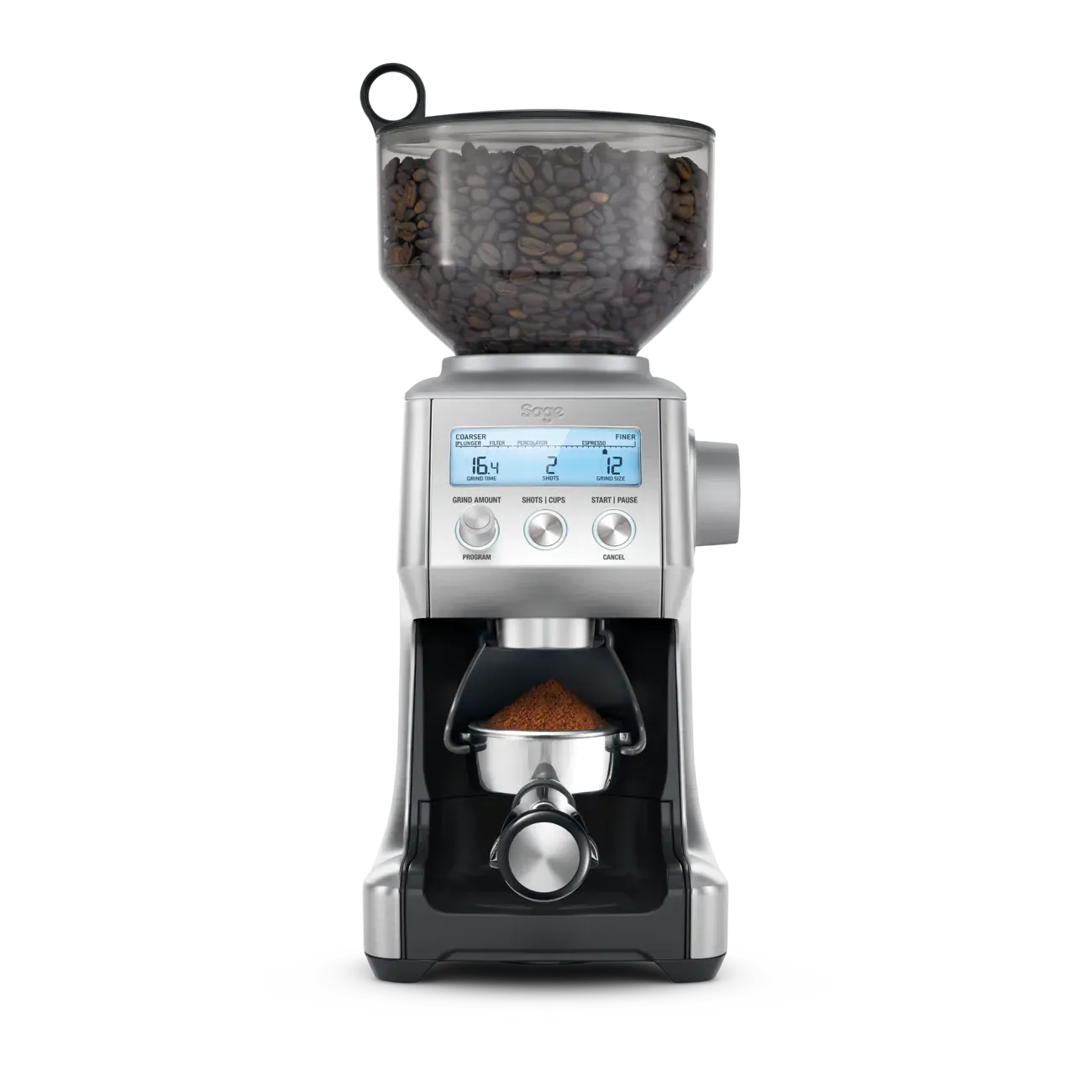
- This Sage Smart Grinder Pro review finds a 40mm conical burr grinder that reaches espresso-fine on the dial, with shot-to-shot consistency close to professional grinders
- Best for a first serious setup paired with a machine that has a weak or no built-in grinder
- Real downsides: ~2.7g retention, a grind display you can’t fully trust, and heat build-up when you pull shot after shot
- This verdict is built on independent Kaffeemacher lab data and UK retailer listings, not Sage’s own marketing copy
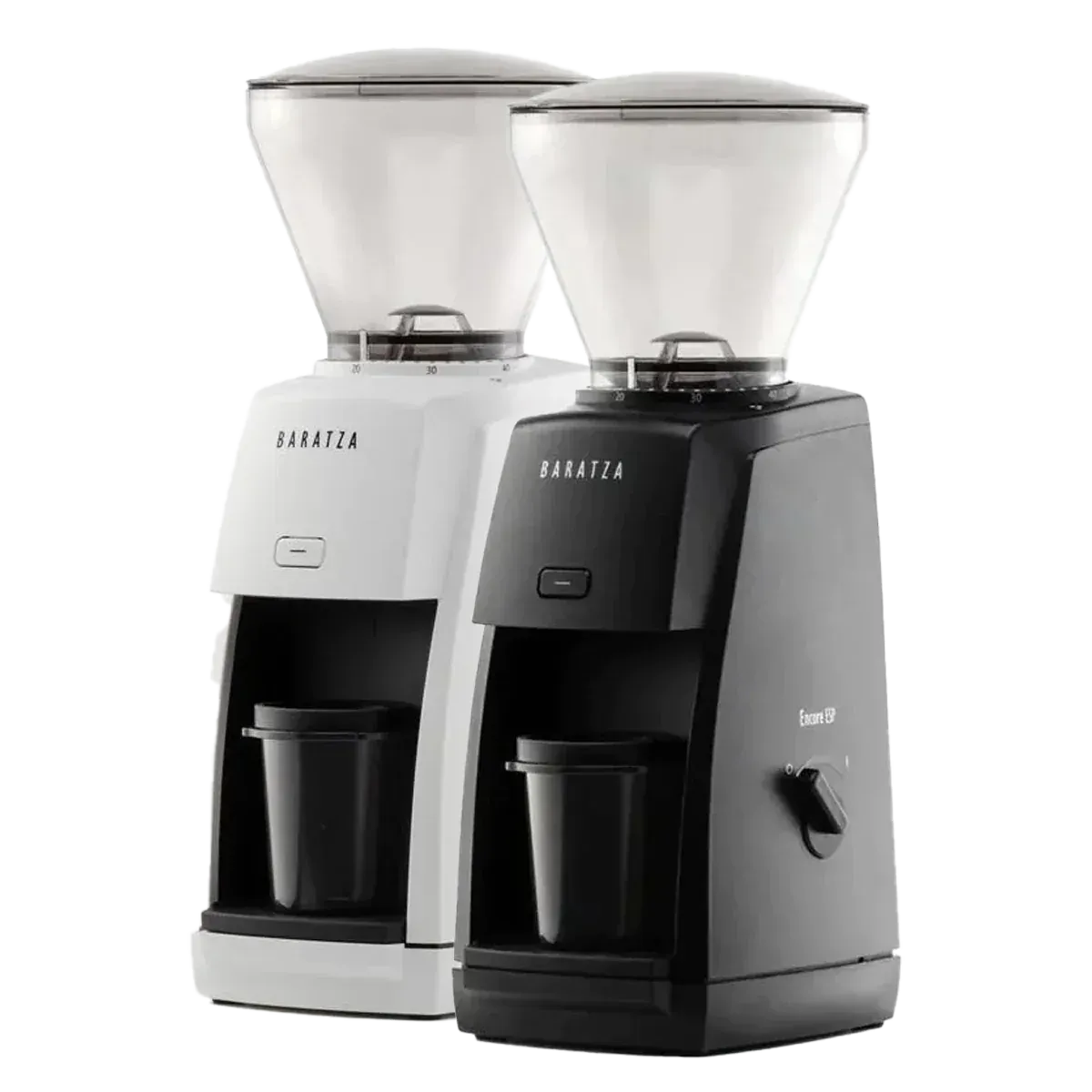
- Skip it if you host big groups or single-dose carefully; the Baratza Encore ESP is the simpler alternative
If you’re assembling your first serious setup on a budget and pairing it with a machine that has a weak or no built-in grinder, such as the Gaggia Classic Evo Pro or the De’Longhi Dedica Style EC685, the Sage Smart Grinder Pro is the one to buy. It’s a 40mm conical burr grinder with a 165W motor that reaches espresso-fine grounds on its own dial, and in independent lab testing it held an 18g dose to within 0.4g across 40 shots. The catch: around 2.7g of coffee stays inside it, and it warms up if you grind shot after shot.
Who should buy the Sage Smart Grinder Pro
- You’re building a first serious setup and your machine has no grinder worth keeping, or a weak one
- You want digital dose timing accurate to 0.2 seconds rather than guessing by eye
- You need a 450g hopper that doesn’t need refilling every other day
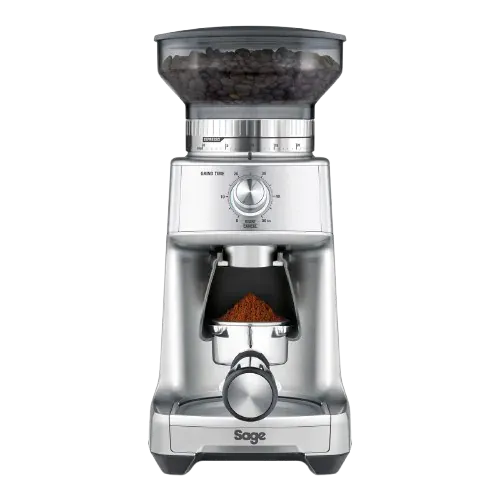
- You’re stepping up from a Sage Dose Control Pro and want a wider grind range and a bigger hopper
Who should skip it
- You want the simplest possible grinder with fewer settings to think about (the Baratza Encore ESP has 40 stepped settings and no timer to programme)
- You host and grind batch after batch for a crowd (the grounds warm up and shots run faster with each pass)
- You single-dose and weigh every gram (2.7g retention still contaminates your first dose after any change)
Sage Smart Grinder Pro review: key specs
| Spec | Detail |
|---|---|
| Burr type | 40mm stainless-steel conical |
| Motor | 165W |
| Grind settings | 60, set on a dial with a digital display |
| Hopper capacity | 450g |
| Dose timer | Electronic, 0.2-second increments |
| Grind time (18g dose) | 16 seconds |
| Retention | ~2.7g per grind |
| Dimensions | ~21.5 x 16 x 38.9cm (W x D x H) |
| UK availability | Amazon UK and most UK kitchen retailers |
Espresso grind quality: espresso-fine on the dial
Independent lab testing from Kaffeemacher found the Smart Grinder Pro easily goes fine enough for a good espresso in 25 to 30 seconds, using nothing but the dial on the right-hand side. You don’t need to open it up or touch the burrs to get there.
The one quirk is the display. Turning the dial, you feel the steps of a gear wheel, and those steps don’t always match the number on screen: Kaffeemacher turned it three steps and watched the display move two. Treat the number as a rough guide and dial in by taste, shot time and the weight in your cup, which is how espresso works on any grinder anyway.
Speed is the other trade-off. A standard 18g espresso dose takes 16 seconds, slow next to the 3 to 6 seconds a commercial grinder needs, but in line with home grinders at this level.
Consistency and retention: what the lab measured
Kaffeemacher’s lab testing found a maximum 0.4g variance across 40 consecutive espresso pulls, which the lab describes as comparable to professional espresso grinders. For a home hopper grinder, that’s a strong result.
Retention is the weaker number. Kaffeemacher measured ~2.7g of dead space per grind, cross-referenced against a Niche Zero at 0.47g and a Graef CM800 at 8g in the same test set. The Smart Grinder Pro sits in the middle: better than a cheap hopper grinder, worse than anything built for single-dosing. Day to day, your first dose after changing settings pulls a mix of old and fresh grounds. Kaffeemacher’s advice is simple: if the grinder has sat for more than 15 minutes, grind out a few grams before your first shot.
Heat build-up: mind the back-to-back shots
Kaffeemacher’s testing found that across 10 back-to-back shots, extraction time dropped from 29 seconds to 22 seconds, and the ground coffee itself warmed up noticeably. The lab’s own caveat is that the grinder isn’t designed for that kind of continuous use. For a household grinding one or two doses a morning, none of this registers. For hosting, or a shared kitchen grinding six flat whites in a row, it will, and you’ll be nudging the grind finer as you go.
What’s Actually Bad About It
The grind display isn’t fully trustworthy. The number on screen doesn’t always move in step with the dial, so you can’t rely on “setting 12” meaning the same thing every time, and Kaffeemacher rated grind-setting repeatability only “medium”. If you switch between espresso and filter often, expect a few shots of re-dialling each time you come back.
Retention is real, not just a forum gripe. At ~2.7g per grind, your first dose after any setting change is mixed with old grounds, and Kaffeemacher’s own comparison set shows how far this sits from single-dose designs. For most daily users grinding the same setting every morning, this barely matters. For anyone switching roasts or doses often, it’s an annoyance you should budget for. If retention is the deciding factor for you, the best espresso grinder UK guide covers alternatives built to avoid it.
It heats up on consecutive shots. The measured drift from 29 seconds to 22 seconds across 10 pulls shows this isn’t built for session-after-session grinding. If your household needs a grinder that can run all morning without a break, this isn’t it, and the best espresso grinder UK guide has picks better suited to heavier daily volume.
It’s slow. At 16 seconds for an 18g dose you’ll stand and wait every morning. That’s normal for home grinders at this level, but if you’ve used a café grinder, it will feel sluggish.
Sage Smart Grinder Pro review: how it compares
Sage Dose Control Pro. The Dose Control Pro is the simpler, cheaper sibling: 130W motor versus 165W, a 1-second dose timer versus 0.2 seconds, and a 340g hopper versus 450g. Both share the same 40mm conical burr family and the same “60 settings” marketing claim. If you want finer dosing control and a bigger hopper, pay the extra for the Smart Grinder Pro. If you just want reliable espresso from medium or dark roasts and don’t care about timer precision, the Dose Control Pro does the job for less.
Baratza Encore ESP. The Encore ESP takes a different approach to adjustment and single-dosing, and readers weighing grinder philosophy rather than brand loyalty should read the existing Baratza Encore ESP vs Sage Dose Control Pro comparison for how that trade-off plays out between two entry grinders, before deciding whether the Smart Grinder Pro’s extra motor power and hopper size are worth the step up. The direct head-to-head is in the Sage Smart Grinder Pro vs Baratza Encore ESP comparison. For a full rundown of how grinders in this bracket stack up, see the best espresso grinder UK guide.
Grinder pairing and machine fit
The Sage Smart Grinder Pro earns its place next to machines that need help reaching espresso-fine grounds:
- Gaggia Classic Evo Pro: No built-in grinder at all, so this is the natural step-up partner. The 165W motor and 16-second grind time suit a daily espresso routine without a long wait.
- Sage Bambino Plus: No built-in grinder, so it needs a capable partner. The Smart Grinder Pro’s 0.2-second timer lets you match the dose to its 54mm basket precisely.
- De’Longhi Dedica Style EC685: Another grinderless machine in UK kitchens with limited counter space. The Smart Grinder Pro’s 21.5cm width keeps the combined footprint reasonable.
Each of these pairs well within the budget mapped out in the best espresso machine under £500 UK guide, so you can sanity-check the machine side of the combo before committing to the grinder.
FAQ
Does the Sage Smart Grinder Pro grind fine enough for espresso?
Yes. Kaffeemacher’s lab testing found the Sage Smart Grinder Pro easily grinds fine enough for a good espresso in 25 to 30 seconds using only the dial. You don’t need to adjust the burrs by hand. Dial in by taste and shot time rather than trusting the number on the display.
How many grind settings does the Smart Grinder Pro have?
The Sage Smart Grinder Pro has 60 grind settings, from espresso-fine to French press coarse, chosen on a dial with a digital display. Kaffeemacher found the display doesn’t always match the dial’s physical steps, so treat the number as a guide and adjust by taste, shot time and weight.
How much coffee does the Smart Grinder Pro retain between grinds?
The Sage Smart Grinder Pro retains approximately 2.7 grams of coffee per grind, according to Kaffeemacher’s lab measurements. That beats hopper grinders like the Graef CM800 at 8 grams but trails single-dose grinders like the Niche Zero at 0.47 grams. Expect a slightly mixed first dose after any setting change.
Can the Smart Grinder Pro grind for filter coffee and espresso?
The Sage Smart Grinder Pro covers both filter and espresso across its full range, since the 40mm conical burrs and wide adjustment span suit coarser brews too. It’s built primarily around espresso dosing and timing though, so dedicated filter grinders handle batch brewing with less fuss.
What’s the difference between the Smart Grinder Pro and the Dose Control Pro?
The Smart Grinder Pro adds a 165W motor versus 130W, a 450g hopper versus 340g, and a 0.2-second dose timer versus 1-second steps. Both share the same 40mm conical burr family. Choose the Smart Grinder Pro for finer dosing control and a bigger hopper; choose the Dose Control Pro to save money.
Which espresso machines pair best with the Smart Grinder Pro?
The Sage Smart Grinder Pro pairs best with machines that lack a strong built-in grinder, such as the Gaggia Classic Evo Pro, the Sage Bambino Plus, and the De’Longhi Dedica Style EC685. Each needs a dedicated grinder to reach espresso-fine grounds, and this one fills that gap without a £400+ purchase.
Does the Smart Grinder Pro heat up with repeated use?
Yes. In Kaffeemacher’s testing, extraction time fell from 29 seconds to 22 seconds across 10 back-to-back shots as the ground coffee warmed. The lab notes the grinder isn’t designed for that kind of continuous use. One or two shots a morning won’t show it; hosting a crowd will.
Final verdict: Sage Smart Grinder Pro review
Ninth Bar’s verdict on the Sage Smart Grinder Pro comes down to one trade-off: real espresso-grade consistency (0.4g variance across 40 pulls) against ~2.7g of retention and heat build-up when you grind shot after shot. Buy it if you’re pairing it with a machine like the Gaggia Classic Evo Pro or Sage Bambino Plus that needs a proper grinder behind it. Skip it if you host often or single-dose carefully, in which case the Baratza Encore ESP or the best espresso grinder UK guide is the better next stop.