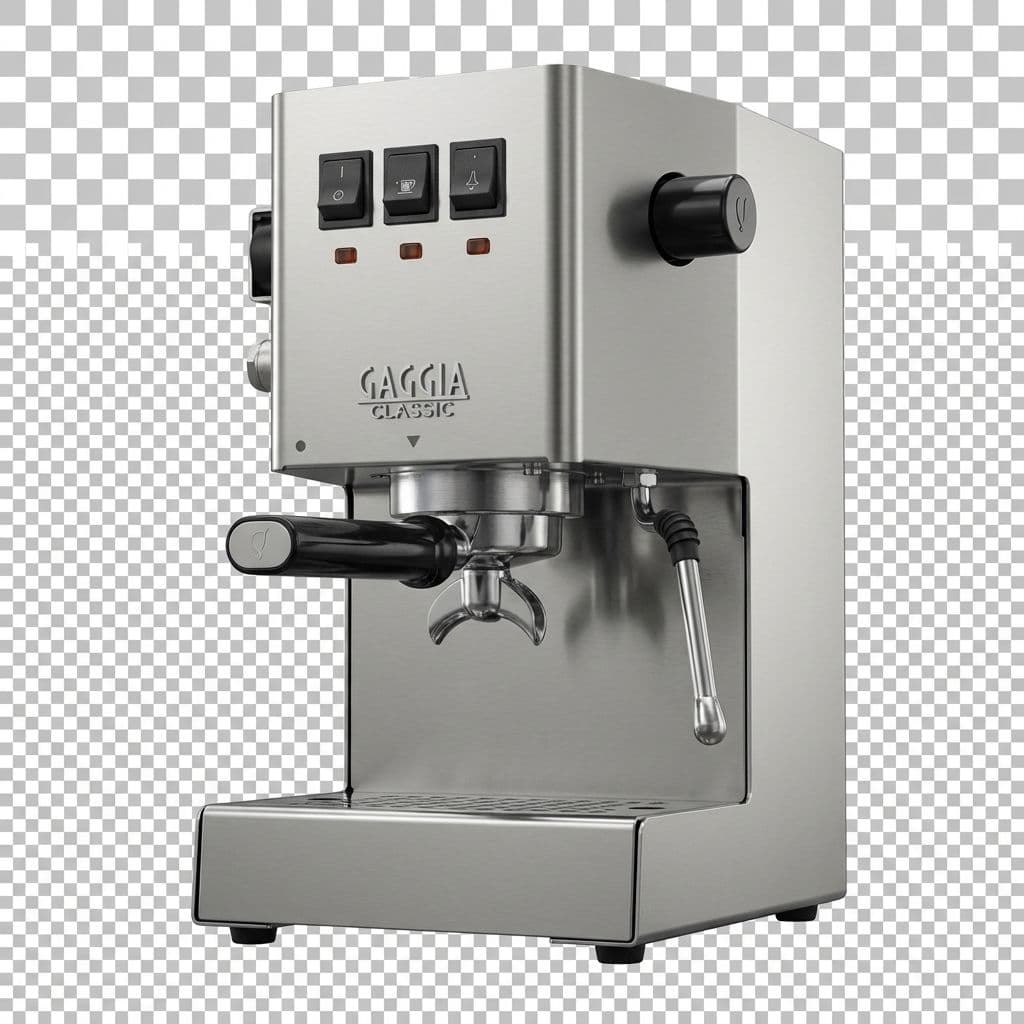
Gaggia
Classic Evo Pro
£549.00
Price verified 9 Mar 2026
- Boiler
- single
- Heat-up
- 540s
- Pressure
- 9 bar
- Pressure profiling
- No
Comparison
By Ninth Bar · Independent UK espresso machine review site
Gaggia
Price verified 9 Mar 2026
Gaggia
Price verified 9 Mar 2026
Gaggia
Price verified 9 Mar 2026
Gaggia
Price verified 9 Mar 2026
| Spec | Gaggia Classic Evo Pro | Gaggia Classic Evo Pro |
|---|---|---|
| Boiler type | single | single |
| Heat-up time | 540s | 540s |
| Pressure profiling | No | No |
| Pump pressure | 9 bar | 9 bar |
| Boiler volume | 0.3L | 0.3L |
This is the choice you're actually making: spend less now and mod later, or spend more upfront for a machine that's closer to ready out of the box.
---
---
For the gaggia classic pro vs gaggia classic evo pro decision, the Evo Pro wins on materials and out-of-box performance. If you want a machine that pulls a proper 9-bar espresso without touching the internals, the Evo Pro is the one. If you want the lowest entry price into the Gaggia Classic platform and don't mind a simple mod, the Classic Pro still makes excellent espresso. Both share the same 58mm portafilter, 15-bar nominal pump, and Italian build quality.
---
---
| Spec | Classic Pro | Evo Pro |
|---|---|---|
| Portafilter | 58mm | 58mm |
| Nominal pump pressure | 15 bar | 15 bar |
| OPV setting (factory) | ~12 bar | 9 bar |
| Group head material | Aluminium | Lead-free brass |
| Solenoid valve | Yes | Yes |
| Pre-infusion | No | No |
| Steam wand | Professional | Professional |
| Made in Italy | Yes | Yes |
| Interface | 3 rocker buttons | 3 rocker buttons |
| Pod compatible | Yes | Yes |
Sources: [gaggia.com](https://www.gaggia.com/manual-machines/new-classic-e24/)
---
Both machines use a 15-bar vibratory pump. The nominal 15-bar figure is marketing, not what hits the puck. Commercial espresso runs at 9 bar. The Classic Pro ships with the OPV set higher than this, which means over-extraction is more likely with specialty coffee.
As discussed on CoffeeForums.co.uk: "The 15 bar pressure is used with a 'pressurised' basket to make 'crema' with pre-ground coffee. Commercial coffee machines work at approx 9 bars, using fresh coffee." [(source)](https://www.coffeeforums.co.uk/threads/gaggia-classic-pro-or-evo.71164/)
The Evo Pro resolves this at the factory. The Classic Pro requires a manual OPV adjustment, which is cheap and well-documented, but it's an extra step.
---
This is the Evo Pro's clearest upgrade. The Classic Pro uses an aluminium group head. The Evo Pro ships with a lead-free brass group head, which has better thermal mass and no aluminium-leaching concerns.
A CoffeeForums member put it plainly: "I would say it is probably worth the extra especially if you are concerned about aluminium leeching." [(source)](https://www.coffeeforums.co.uk/threads/gaggia-classic-pro-or-evo.71164/#post-894116)
Brass retains heat more consistently than aluminium, which helps shot-to-shot temperature stability. This matters most when you're pulling multiple shots back to back, such as making two lattes in a row.
---
The Classic Pro can make good espresso without major work. Owners on Home-Barista report solid results with only basic accessories: "I am using a Gaggia Classic Pro, without any major modifiers. The only upgrades I've done were: Add a proper 58mm tamper, Buy a very basic WDT tool, A distributor tool, A metal funnel." [(source)](https://www.home-barista.com/tips/newbies-journey-with-gaggia-classic-pro-t87521.html)
But the same community is clear that the stock setup has limits. Many threads note that "videos and posts about this espresso machine seem to have it require modifications to perform better." [(source)](https://www.home-barista.com/advice/how-good-is-stock-gaggia-classic-pro-t89186.html)
The Evo Pro ships with 9-bar extraction as standard, which is confirmed in the Home-Barista marketplace thread: "Gaggia Classic Evo Pro: Now Available at Whole Latte Love with 9 Bar Extractions." [(source)](https://www.home-barista.com/marketplace/gaggia-classic-evo-pro-now-available-at-whole-latte-love-with-9-bar-extractions-t88137.html)
---
Both machines use the same "professional" steam wand description from Gaggia. In practice, neither is a high-power dual-boiler. The Gaggia Classic platform uses a single thermoblock/boiler, which means you switch modes between brewing and steaming.
Expect to wait around 30 to 45 seconds between pulling a shot and steaming milk. This is a known limitation of the platform, not a fault unique to either model. If you're making multiple milk drinks in sequence, factor in this workflow pause. For a machine with a dedicated steam boiler, see our [Best Espresso Machines Under £600](/guide/best-espresso-machines-under-600) guide.
---
Neither machine will reach its potential with a blade grinder or a cheap supermarket burr grinder. The 58mm portafilter and unpressurised baskets (which you'll be using) demand consistent particle distribution.
At minimum, pair either machine with a burr grinder capable of espresso-fine adjustment. Budget around £100 to £150 for a decent entry-level option. The Evo Pro's 9-bar factory setting makes grind consistency more critical, not less, because correct pressure exposes grind quality more honestly than over-pressure extraction.
---
This is where the comparison gets real.
Classic Pro route:
Evo Pro route:
The OPV is already done on the Evo Pro, which saves you the mod cost and the anxiety. If the Evo Pro is more than £80 to £100 above the Classic Pro at the time you're buying, the Classic Pro plus mods may match it for less.
---
Both machines:
Classic Pro specifically:
Evo Pro specifically:
---
If you're considering stepping outside the Gaggia Classic family entirely, the [Sage Bambino Plus](/review/sage-bambino-plus) offers automatic milk texturing and a faster heat-up time, with a different workflow philosophy. See our [Sage Bambino Plus vs Gaggia Classic Evo Pro](/versus/sage-bambino-plus-vs-gaggia-classic-evo-pro) comparison for a full breakdown.
For those willing to spend more and get a different tier of machine, our [Best Espresso Machines Under £600](/guide/best-espresso-machines-under-600) covers the options above the Gaggia Classic platform.
---
Is the Gaggia Classic Evo Pro worth the extra cost over the Classic Pro?
The Evo Pro is worth the premium if the price gap is under £100. You get a lead-free brass group head, a factory 9-bar OPV, and no immediate modding requirement. If the gap is wider, buy the Classic Pro and spend £10 on the OPV spring mod instead.
Does the Gaggia Classic Pro need to be modified to make good espresso?
The Classic Pro makes acceptable espresso stock, but most owners recommend at minimum a 9-bar OPV adjustment. Community members on Home-Barista confirm good results with just a tamper, WDT tool, and distributor, though the pressure mod improves consistency noticeably with specialty beans.
What grinder should I use with the Gaggia Classic Pro or Evo Pro?
Both machines need a burr grinder with genuine espresso-range adjustment. Budget at least £100 to £150 for a grinder. Skimping on the grinder undermines both machines significantly. A good grinder matters more than the OPV setting on either model for final cup quality.
Can the Gaggia Classic Evo Pro handle light roast coffee?
Owners on Home-Barista report the Evo Pro delivers good results with light and medium roasts at 9-bar extraction. Light roasts need careful grind adjustment and may benefit from a temperature surfing technique, since neither machine has PID control as standard.
Which machine is better for a complete beginner?
The Evo Pro is the better starting point for someone new to manual espresso. The factory 9-bar OPV removes one variable immediately. Both machines share the same 58mm portafilter and three-button interface, but the Evo Pro lets you focus on grind and technique rather than machine setup from day one.
---
The gaggia classic pro vs gaggia classic evo pro decision comes down to one thing: how much is your time and peace of mind worth?
The Classic Pro is a proven platform that delivers real espresso with a modest investment in accessories and one simple mod. It remains one of the best entry points into manual espresso under £300.
The Evo Pro takes everything that works about the Classic Pro, upgrades the group head to lead-free brass, sets the OPV correctly at the factory, and charges a premium for the privilege. For most buyers, that premium is justified if the price gap is reasonable.
Buy the Classic Pro if you want the lowest cost of entry and don't mind the mod community. Buy the Evo Pro if you want to start making espresso, not start making modifications. For a broader view of what else sits in this price bracket, see our [Best Espresso Machine Under £500 UK](/guide/best-espresso-machine-under-500-uk) guide.
Looking for a different machine? See our Sage Bambino Plus review or the Sage Barista Express Impress review. Research sourced from verified UK owner reports on r/espresso (https://www.reddit.com/r/espresso/) and Home-Barista (https://www.home-barista.com/espresso-machines/).
The Gaggia Classic Pro is the cheaper, more mod-friendly entry point; the Gaggia Classic Evo Pro is the more refined, ready-to-brew option.
If the Evo Pro costs less than about £100 more than the Classic Pro, it’s generally the better buy: you get a lead-free brass group head and a factory-set 9-bar OPV, so you avoid opening the case and worrying about aluminium or pressure settings.
If the price gap is larger, the Classic Pro plus a simple 9-bar OPV mod (under £10 and ~20 minutes of work) is the better value. You’ll match most of the Evo Pro’s in-cup performance, but you can’t retrofit the brass group head.
Buy the Classic Pro if:
Buy the Evo Pro if:
In both cases, factor in:
Both machines share the same core platform: 58mm portafilter, 15-bar vibratory pump, single-boiler workflow, no pre-infusion, and Italian build. The real choice is whether you want a project (Classic Pro + mods) or a product (Evo Pro, ready to pull 9-bar shots from day one).
Buy the Classic Pro if budget is tight and you enjoy modding; buy the Evo Pro if you want correct 9‑bar extraction and brass internals out of the box.
If the Evo Pro is within about £100 of the Classic Pro, it’s usually the smarter long‑term choice: you avoid opening the machine, get a lead‑free brass group head, and have factory‑set 9‑bar pressure. If the gap is larger than ~£100, the Classic Pro plus a £10 OPV spring mod is better value, and you’ll get very similar in‑cup performance (minus the brass group head’s thermal and material benefits).
Classic Pro – best for tinkerers and tight budgets
Evo Pro – best for out‑of‑box performance
In both cases, budget for a proper espresso grinder (£100–£150+), a 58mm tamper, WDT tool, and ideally a bottomless portafilter. The grinder will influence cup quality more than which Classic you pick. The real decision is whether you want a project (Classic Pro + mods) or a product (Evo Pro, ready to brew).
This page contains affiliate links — we may earn a commission at no extra cost to you.