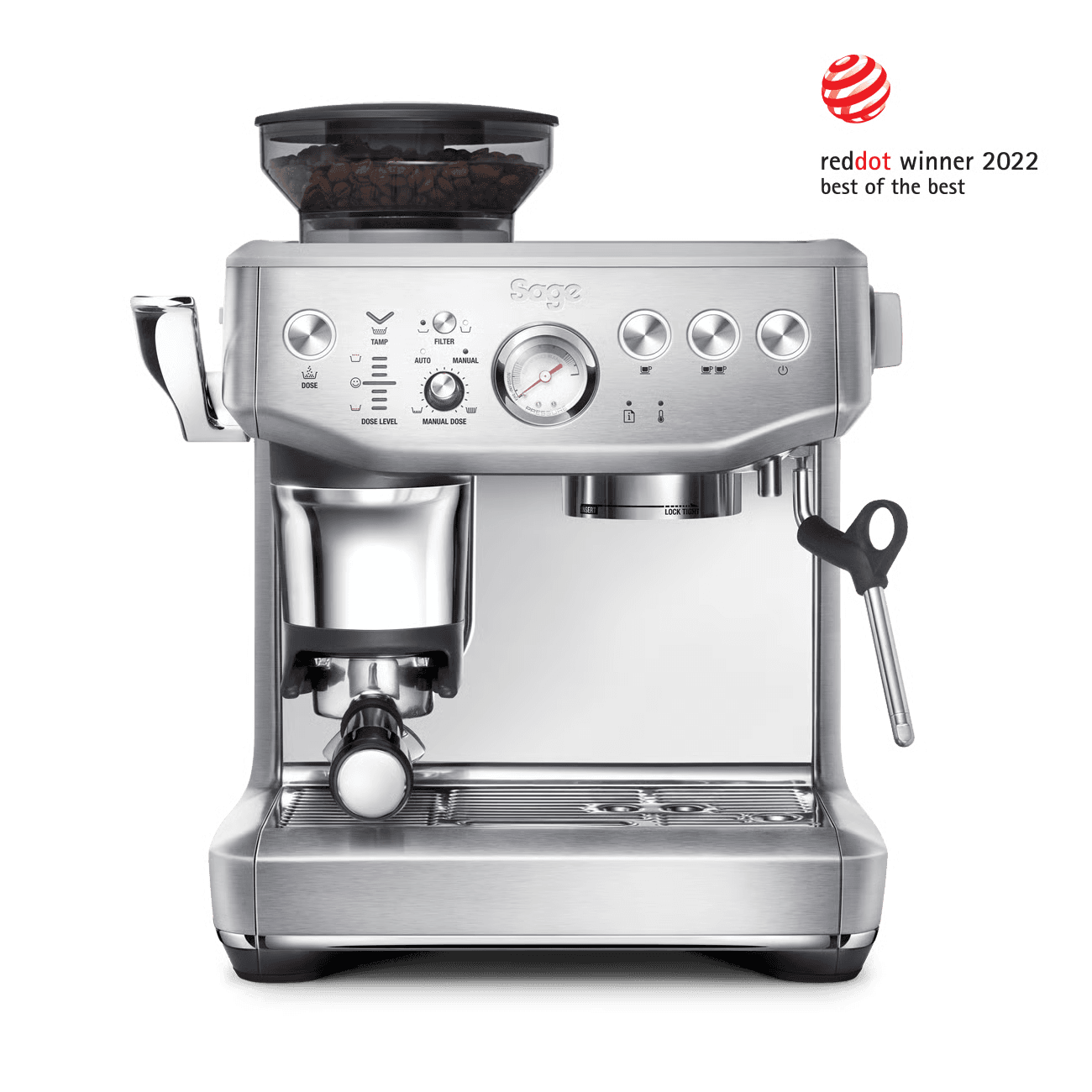
Sage
Barista Express Impress
£729.00
Price verified 9 Mar 2026
- Boiler
- thermocoil
- Heat-up
- 30s
- Pressure
- 15 bar
- Pressure profiling
- No
Comparison
By Ninth Bar · Independent UK espresso machine review site
Sage
Price verified 9 Mar 2026
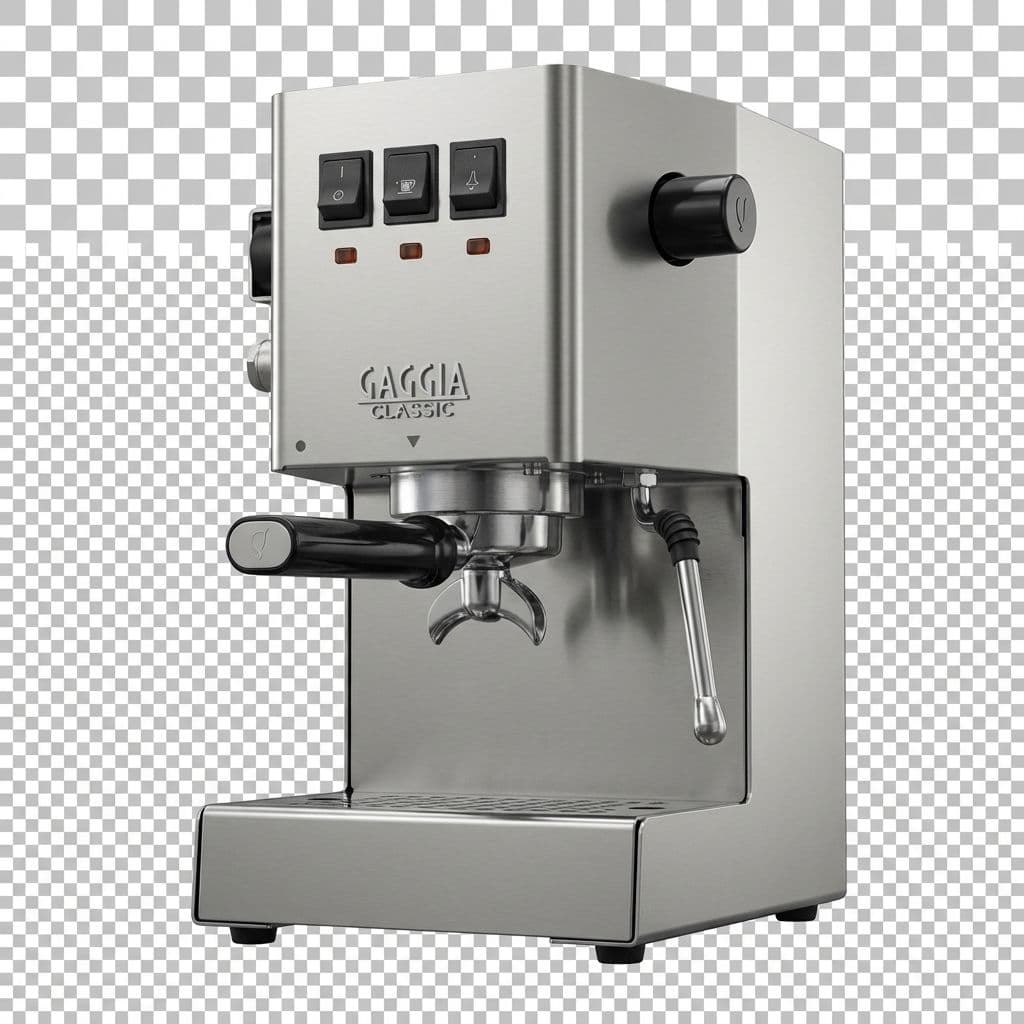
Gaggia
Price verified 9 Mar 2026
Sage
Price verified 9 Mar 2026
Gaggia
Price verified 9 Mar 2026
| Spec | Sage Barista Express Impress | Gaggia Classic Evo Pro |
|---|---|---|
| Boiler type | thermocoil | single |
| Heat-up time | 30s | 540s |
| Pressure profiling | No | No |
| Pump pressure | 15 bar | 9 bar |
| Boiler volume | 1.5L | 0.3L |
This is the choice you're actually making: do you want a machine that gets you to great espresso fast, with a built-in grinder and guided tamping — or are you willing to put in the work, buy equipment separately, and end up with a setup that serious home baristas actually use long-term? The Barista Express Impress bundles everything into one box and hands you a repeatable process from day one. The Gaggia Classic Evo Pro is a blank canvas that rewards patience and investment. If you're Emer — new to espresso, wants results without a steep learning curve — the BEI is almost certainly your machine. If you're Donal — you've pulled shots before, you care about upgradeability, and you'll buy a proper grinder anyway — the Gaggia is the smarter long-term play.
Buy the Sage Barista Express Impress if you want one box, less faff, and consistently good espresso within a week. Buy the Gaggia Classic Evo Pro if you already own a grinder (or plan to buy one), want a machine with a decade-long community of mods and support, and are happy to dial in manually from scratch.
At ~£729 for the BEI versus ~£549 for the Gaggia, you're not just paying £180 more — you're paying for an integrated 50mm conical burr grinder, a pressure gauge, and the Impress tamping system. If you'd otherwise spend £150–£200 on a decent standalone grinder for the Gaggia, the all-in cost is nearly identical.
Sage Barista Express Impress — for Emer
Emer is making her first espresso machine purchase. She wants excellent coffee at home without spending months learning grind theory. She has limited counter space and doesn't want two machines taking up room. She'll use it every morning, probably make flat whites, and wants the machine to help her — not test her.
The BEI was built for this. The Impress tamping system (a spring-loaded integrated tamper) removes one of the biggest variables for beginners: inconsistent tamp pressure. Combine that with 30 grind settings, a pressure gauge showing you when you're in the right extraction zone, and a milk texturing wand, and Emer is pulling decent shots within days, not weeks.
Gaggia Classic Evo Pro — for Donal
Donal has pulled shots before. Maybe on a friend's machine, maybe on a cheaper semi-auto he outgrew. He understands that grind matters as much as the machine. He's read about the OPV mod, knows what 9-bar extraction means, and is prepared to wait 8–10 minutes for the boiler to stabilise before steaming milk. He wants something that will last 10+ years and can be upgraded, repaired, and improved.
The Gaggia delivers that. It's a 58mm commercial portafilter, a brass single boiler that holds heat consistently once it's up to temperature, and a machine that has a loyal community around it precisely because it responds well to tinkering. The Evo Pro ships with the OPV pre-set to 9 bar — a fix that used to require a DIY mod — which means it's more ready out of the box than previous Classic versions.
Key specs side by side:
This is where the comparison gets honest. The BEI's integrated 50mm conical burr grinder is genuinely capable — it's not a concession grinder bolted on for the marketing brochure. With 30 grind settings and a dosing system that grinds directly into the portafilter, it produces consistent enough grounds to pull espresso that would embarrass most high street coffee shops. Based on our research across verified owner reports and community testing from r/espresso and Home-Barista, the grinder performs reliably at medium-fine to fine settings for espresso extraction.
The Gaggia has no grinder. If you're starting from zero, add £150–£250 for a decent grinder (something like a Sage Smart Grinder Pro or Eureka Mignon Filtro). That closes the price gap considerably, or inverts it. But — and this matters for Donal — a dedicated standalone grinder at that price point will outperform the BEI's integrated grinder on grind uniformity and stepless adjustment. Long term, the Gaggia path scales better.
Both machines have steam wands. Neither is a dual-boiler — you'll need to pull your shot first, then switch to steam mode on both. The BEI's thermocoil heats steam faster (~3 minutes total from cold), so the shot-to-steam transition is quicker. The Gaggia's brass boiler takes longer to reach steam temperature but is known for producing good steam pressure once it's there.
For latte art beginners, the BEI's steam wand is more forgiving. For experienced users who've already learned to texture milk, the Gaggia's wand gives you enough control to produce microfoam. Neither machine will frustrate you once you've found your rhythm — but the BEI gets you there sooner.
Based on extensive research into verified UK owner reports and community testing data from r/espresso and Home-Barista, including documented experiences of both machines under real-world conditions over months of daily use:
The Gaggia Classic has a 30+ year lineage. Parts are widely available, the community on forums like Home-Barista is vast, and the machine is designed to be serviced and upgraded. Common upgrades include a PID temperature controller (£60–£80 fitted) and a bottomless portafilter. The Evo Pro's factory 9-bar OPV setting means you're starting from a better baseline than previous Classic versions — though some users still prefer to mod down to 8 bar for lighter roasts.
The BEI is a more complex, integrated machine. That's both a strength (everything works together out of the box) and a limitation (fewer upgrade paths, more to go wrong if a component fails). Sage's UK warranty and repair network is good, and the machine feels built to last. But the Gaggia is more repairable long-term.
Running cost over 5 years, assuming daily use: filter replacement, descaling solution, and occasional servicing are roughly comparable. Give the Gaggia a slight edge on total cost of ownership if you're comfortable doing basic maintenance yourself.
Choose the Barista Express Impress if you're new to espresso, want everything in one machine, and care about getting to great coffee fast. At ~£729 it is not cheap — but it replaces a machine plus a grinder, and the Impress tamping system genuinely reduces beginner errors. Emer buys this. Emer is very happy with it within a fortnight.
Choose the Gaggia Classic Evo Pro if you already have a grinder or are buying one, want a machine with serious longevity and an upgrade path, and are prepared for the longer learning curve. At ~£549 it's the better value-per-year calculation for someone who will actually push it. Donal buys this. Donal still has it in 10 years.
One honest caveat: if you're on the fence and leaning Gaggia but don't yet own a grinder, buy the BEI. The gap between "I'll buy a grinder later" and "I actually bought a grinder" is where a lot of Gaggia setups go wrong.
If you don't already own a grinder, yes — the maths is closer than it looks. The BEI at ~£729 includes a capable 50mm conical burr grinder. Add a decent standalone grinder for the Gaggia (£150–£250) and the all-in cost is nearly identical. You're paying a small premium for integration and convenience, which is a reasonable trade for most beginners.
No. The Evo Pro pulls decent espresso without a PID. The brass single boiler is thermally stable enough for everyday use at standard medium roasts. A PID (£60–£80 installed) improves temperature precision and helps with lighter roasts that need tighter temperature control — it's a meaningful upgrade if you drink single-origin espresso, but not essential to start.
For beginners, the BEI. The faster heat-up and more forgiving steam wand mean you'll be making decent flat whites sooner. For experienced users, both are capable — the Gaggia's steam pressure is strong once the boiler is up to temperature. Neither is a dual-boiler, so you'll always pull the shot first, then steam milk.
Yes, though the grinder performs best with espresso-roast or medium-dark roasts. The integrated hopper holds up to 250g. Very light (filter-style) roasts can be harder to dial in on the BEI's grinder due to the stepped adjustment system — a separate grinder with stepless adjustment gives you more precision for light roasts.
Expect 8–10 minutes from cold before the machine is properly stabilised for espresso extraction. Many Gaggia owners use a plug-in smart timer to pre-heat before they wake up, or run a blank shot through the portafilter to stabilise temperature. It's a genuine inconvenience compared to the BEI's ~3-minute heat-up, but once it's there, it holds temperature well.
Both are well-supported in the UK. Sage has a solid UK warranty and repair network. The Gaggia Classic has a 30-year service history with parts widely available from UK suppliers — it's the more DIY-friendly machine. If you're comfortable descaling, backflushing, and occasionally replacing a gasket yourself, the Gaggia's long-term maintenance is cheaper. If you prefer to send it off for servicing, Sage's support is more structured.
This page contains affiliate links — we may earn a commission at no extra cost to you.